5 min read
Why is My Oil Solid? A Formulator’s Guide to Blending with Viscous Aromatics
Written By: Robin Lander
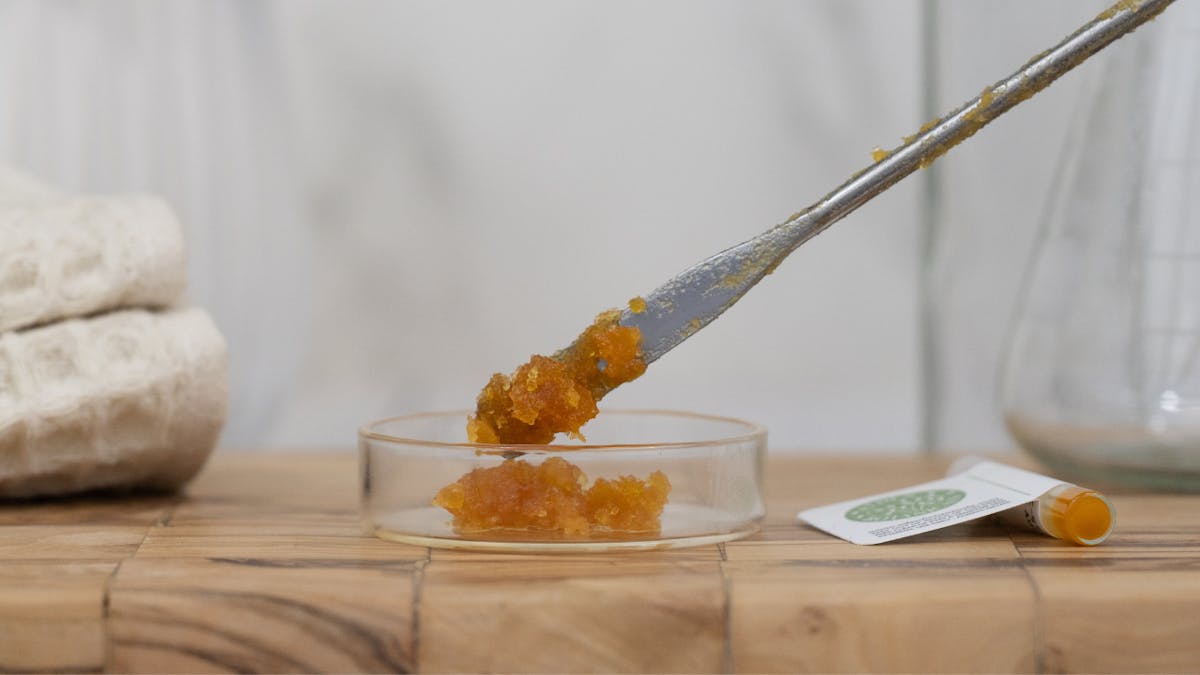
If you’ve ever opened a bottle of essential oil or extract expecting a smooth pour — only to find a waxy, immobile block — no need to fret. Some aromatic materials, especially certain absolutes, CO2 extracts, and resins, can be surprisingly thick or even solid at room temperature.
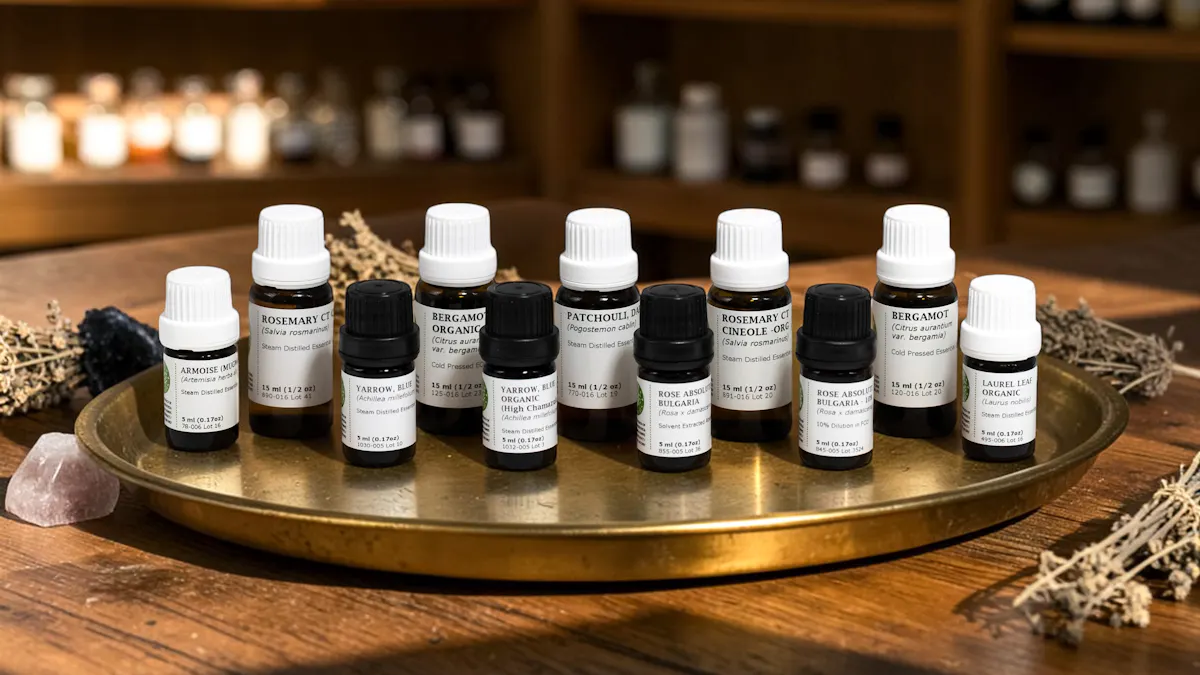
These viscosity variations are completely normal and depend on the plant source and extraction method. While most steam distilled essential oils are quite fluid and pass through an orifice reducer easily, others are more viscous, such as Myrrh and Vetiver, and are not compatible with orifice reducers.
When it comes to Absolutes and CO2 extracts, many require gentle warming to become pourable, particularly if they have been stored in a cool place. In this guide, we’ll walk you through how to identify, warm, and successfully incorporate these thicker aromatics into your formulations like a pro.
Step 1: Check Before You Blend
If you’re not sure about the consistency of the material, or what it’s soluble in, here’s where to look:
Read the Appearance description in the Details section of the product page.Check the Solubility & Blending Suggestions section on the left side of the product page.View the product photo at the top left of the product page to see the consistency in real life, after warming, like this one for Oakmoss Absolute:Step 2: Gentle Warming Methods
Water Bath or Double Boiler
Place the material in its original glass bottle/container into a heat-safe bowl.Fill the bowl with warm-to-hot water, enough to gently warm the material without submerging the bottle opening.Loosen the cap slightly to allow for expansion.Allow the oil to warm for 10-20 minutes, replacing the water as needed if it cools. Alternately, you can set the heat-safe bowl inside of a saucepan that is filled with 1-2 inches of water (enough to go halfway up the heat-safe bowl) and set the saucepan on a hotplate or stovetop on low. Add a small amount of water to the heat-safe bowl, but not enough to allow the water to get into the bottle.Monitor the water with a thermometer, if possible. Most aromatic materials will liquefy at an internal temperature of 120-140° Fahrenheit, and it is best to heat no more than 140° if possible. Therefore, keep your water temperature at a maximum of 140°.Continue warming until you get the oil at the right consistency to work with. It is important to remember that different oils will take varying amounts of time to liquefy, depending on how solid they are and their ability to soften.The Rice Method
This low-tech, effective technique is a favorite for warming smaller bottles:
Heat dry, uncooked rice in a bowl in a microwave for one minute.Nestle the unopened bottle into the warm rice.Let it sit until the contents are mobile. Reheat (the rice only) as needed.Step 3: Be Ready to Work Quickly
Some oils will stay warm for a long time, while others need to be worked with quickly to incorporate.
Have pipettes, beakers, and/or a scale at the ready.If you will be using a glass dropper to move the heated oil, please pre-warm the glass part in a warm oven (use caution when handling).If you will be moving the heated oil to another glass container, it is a good idea to pre-warm the new container to a temperature that is close to the temperature of the heated oil; if it is glass, use a warm oven or toaster oven.Step 4: Dilution Tips
Diluting into a Carrier Oil
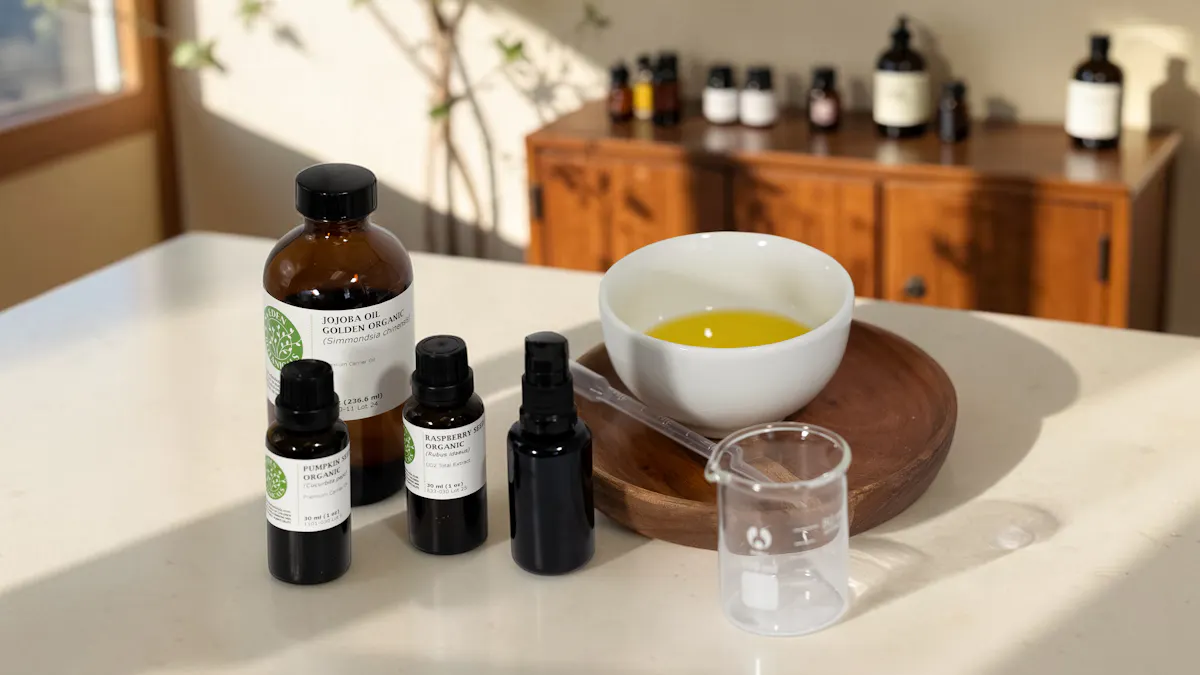
Fractionated Coconut Oil – Organic or Jojoba Oil, Golden – Organic are excellent carrier oil choices, both for their neutral aroma and stability.
Pre-warm your carrier oil to near the same temperature as the warmed aromatic material.Stir or shake the blend regularly until the materials fully incorporate (it may take some time).Some materials noted as ‘partially soluble’ or ‘not soluble in carrier oil,’ such as Cocoa Absolute - Organic, may not incorporate but will impart their aroma to the carrier oil over time.Diluting into Alcohol
Never heat alcohol due to fire hazard.Warmed materials should easily incorporate into room temperature alcohol.As with carrier oils, shake periodically and give the blend time to homogenize.Final Notes: Filtering & Stability
Once your material has been blended:
It may be necessary to re-warm the mixture to fully incorporate the material.You may need to filter out any insoluble particles, especially in alcohol blends.Avoid repeated heating. If practical, dilute your entire batch the first time you warm it, to prevent degradation.Getting to Know the Materials
Here are examples of aromatic materials that typically require warming to become pourable:
Amber Oil, Fossilized (thick)Arnica CO2 – Organic (thick)Beeswax Absolute (thick)Black Currant Bud Absolute (solid)Butter CO2 (thick)Calendula CO2 (thick, waxy)Cassie Absolute (semi-solid)Cedarwood, Virginia (thick)Chamomile, Blue CO2 – Organic (solid)Clary Sage Absolute (solid)Cocoa Absolute – Conventional (solid)Cocoa Absolute – Organic (solid)Coconut Pulp CO2 – Organic (partially waxy)Cypress By-Absolute (solid)Fir, Balsam Absolute (solid)Hay Absolute (solid)Immortelle Absolute (solid)Jasmine CO2 (semi-solid)Labdanum Absolute – Clear (solid)Liquidambar (Styrax) (semi-solid)Mimosa Absolute (solid)Nutmeg Absolute (thick)Oakmoss Absolute (solid)Oakwood Absolute – 50% (semi-solid)Orris Butter (15% irones) (solid)Osmanthus Absolute (thick)Rose By-Absolute (thick)Rosemary Antioxidant CO2 – Organic (thick)Sandalwood By-Absolute (thick)Seaweed Absolute (solid)Spruce, Black Absolute (solid)Tobacco Absolute (thick)Tonka Bean Absolute (solid)Tonka Bean Butter – Organic (solid)Tuberose Absolute – Fine (thick)Vanilla Absolute (thick)Vanilla Absolute – Organic (thick)Vanilla CO2 – Organic (solid)Violet Leaf Absolute (solid)Vitamin E Oil – Bioxan® SF (thick)The following materials may crystallize, become turbid, or form wax globules when cold and may require warming to homogenize:
Balsam of PeruGalangal CO2Gardenia ExtractRose Otto, TurkeyRose Otto, Bulgaria - OrganicCarrier Oils such as Argan Oil – Organic, Baobab Oil - Organic, Moringa Oil - Organic, Sea Buckthorn CO2 - Organic, and Tamanu (Foraha) Oil - OrganicWith a little practice working with thick or solid aromatics, you’ll be able to incorporate these beautiful materials into your formulations with confidence. Have questions? Contact us, we’re here to help!