
Solubility & Blending Suggestions

  • Soluble in both alcohol and fixed oils.
  • Solid and waxy at room temperature; must be slowly heated to become pourable (see instructions here). Calendula CO2 should become fluid at 104 degrees Fahrenheit.
  • For topical products and cosmetics, a dilution of 0.1 - 0.3% of the total formula is suggested. Up to 1 - 3% dilution may be suitable for some applications.
  • We suggest combining Calendula CO2 with a carrier oil, or a combination of carrier oils, such as Sunflower Oil - OrganicJojoba Oil, Golden - Organic, or Fractionated Coconut Oil - Organic. For guidance on how to incorporate this product into the carrier of your choice, please see our FAQs section.
  • While we don't have information for Calendula CO2 Extract, Arctander describes the use of Calendula Absolute “when the green ‘crushed stalk’ note may be called for” and that it “introduces certain natural notes in chrysanthemum fragrances” and gives interesting effects with oakmoss, maté and tea leaf extracts, and cypriol, and that “traces may be useful in hyacinth, lilac, gardenia, reseda, moss-bases, etc.”*
  • *Arctander, Steffen. Perfume and Flavor Materials of Natural Origin, 1960, pp. 399-400.

    Suggested Resources

    • Carrier Oils for Aromatherapy & Massage, Len Price, 2004, pp. 45-8.
    • Liquid Sunshine – Vegetable Oils for Aromatherapy, Jan Kusmirek, 2002, pp. 172-3.
    • CO2 extracts in aromatherapy: 50+ extracts for clinical applications, Madeleine Kerkhof, 2018, pp. 38-40.
    • The Carrier Oil Palette: Fixed Oils, Butters, Herbal Oils, and CO2 Extracts of the Carrier Oil Palette, Jade Shutes and Sherilyn Siegmund-Roach, 2022, pp. 130-132.
    • Perfume and Flavor Materials of Natural Origin, Steffen Arctander, 1960, pp. 399-400.
    • “A Sea of Orange and Gold – Tagetes an Marigolds,” Matvey Yudov, February 2023, https://www.fragrantica.com/news/A-Sea-of-Orange-and-Gold-Tagetes-and-Marigolds-17714.html

    Calendula CO2

    Calendula officinalis L.

    (6)

    SKU 138-G sizes:

    2 grams (1/14 oz)
    $6.75
    5 grams (3/17 oz)
    $11.00
    15 grams (1/2 oz.)
    $24.25
    50 grams (1 3/4 oz)
    $60.50
    100 grams (3 8/17 oz)
    $107.50
    200 grams (7.055 oz)
    $193.25
    500 grams (17.63 oz)
    $423.25
    1 kg (2 1/5 lb)
    $785.25

    Contact us for bulk inquiries.

    Botanical NameCalendula officinalis L.
    Suggested UseCosmetics, Perfumery, Soapmaking
    INCI NameCalendula Officinalis Flower Extract
    CAS Number84776-23-8
    OriginVarious
    Extraction MethodCO2 Extract
    CultivationConventional
    Plant Partflower.
    Notemiddle.
    Aroma Familyagrestic.
    Aroma ProfileSubtle, herbaceous/green, hay-like, warm, waxy scent.
    AppearanceViscous, waxy substance; color can range from bright red/orange to dark brown.
    Shipping Restriction0 – Non-Hazardous

    Safety Considerations

    • No known safety concerns; dilute before using. A patch test should be performed before use for those with sensitive skin.
    • We recommend that this oil be stored in a cool, dark place, or refrigerated for longer storage.

    Calendula CO2

    Calendula officinalis L.

    (6)

    Our Calendula CO2 total extract is a very beneficial skincare ingredient and has a subtle, herbaceous/green, hay-like, warm, waxy scent. It is a welcome addition to body and bath preparations due to its nourishing and hydrating properties and warm, comforting aroma.

    Size

    Selected size SKU:138-015 - Calendula CO2 15 grams

    2 grams (1/14 oz)
    $6.75
    5 grams (3/17 oz)
    $11.00
    15 grams (1/2 oz.)
    $24.25
    50 grams (1 3/4 oz)
    $60.50
    100 grams (3 8/17 oz)
    $107.50
    200 grams (7.055 oz)
    $193.25
    500 grams (17.63 oz)
    $423.25
    1 kg (2 1/5 lb)
    $785.25
    $6.75
    Details
    Solubility & Blending Suggestions
    Suggested Resources
    Safety Considerations
    Certificates of Analysis (COA)
    Documentation

    Product Overview

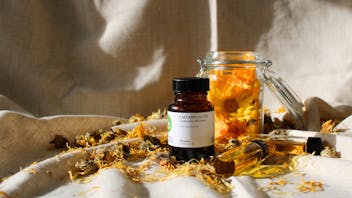
    Our Calendula CO2 total extract is a very beneficial skincare ingredient and has a subtle, herbaceous/green, hay-like, warm, waxy scent. It is a welcome addition to body and bath preparations due to its nourishing and hydrating properties and warm, comforting aroma. Calendula CO2 is extracted from Calendula officinalis, commonly known as pot marigold, and is not to be confused with true marigold –Tagetes minuta or T. bipinata– from which comes the essential oil known as Tagetes.

    Calendula is a charming and vigorous garden plant with bright, toothy orange and yellow blooms. Its name comes from the root word for “calendar,” well-known for its robust ability to thrive in a wide range of climates and bloom for most months of the year. The traditional use of Calendula is legendary – the flower petals are edible and add brilliant color to green salads, the bright orange flower heads have been utilized as a fabric dye, and various extracts and infusions of the plant have been revered in skincare and cosmetic preparations for hundreds of years.

    While many formulators are familiar with the use of Calendula Infused Oil in their products (flowers macerated in a carrier oil base), Calendula CO2 extract allows for greater product consistency along with the ability to choose the carrier oil(s) in which it is paired with. Generally, a Calendula Infused Oil requires approximately a half pound of flowers to make one kilo of oil. By comparison, it takes approximately 40 pounds of flowers to make one kilo of Calendula CO2 total extract. In addition, the lower heat CO2 process provides a more gentle extraction of constituents that may enhance stability and shelf-life.[1]

    While faradiol monoesters are responsible for many of the skincare benefits of Calendula CO2, there are dozens of other components – phytosterols, beneficial lipids, carotenoids, and antioxidants – that complement and enhance the overall effects, making it an ideal addition to topical preparations, facial care, scalp care, and body oils for all skin types. 

    Perfumers may find the unusual aroma of Calendula CO2 an interesting addition to woody, herbaceous, and earthy accords, or might use it to lend a beautiful golden-orange hue to formulations. It is utilized in extravagant compositions to achieve a ‘crushed stem’ effect or to liven up florals such as gardenia and lilac. Perfumer Jeanne Rose suggests pairing with Ambrette Seed to enhance the lovely 'toast smell' of both.

    Please remember that Calendula CO2 has a waxy texture and a deep orange color that will appear in the final product. For topical products and cosmetics, a dilution of 0.1 - 0.3% of the total formula is suggested. Up to 1 - 3% dilution may be suitable for some applications.[2] 

    1 Industry Communication.

    2 Shutes, Jade and Sherilyn Siegmund-Roach. The Carrier Oil Palette: Fixed Oils, Butters, Herbal Oils, and CO2 Extracts of the Carrier Oil Palette, 2022, pp. 130-132.
    Product Overview

    Our Calendula CO2 total extract is a very beneficial skincare ingredient and has a subtle, herbaceous/green, hay-like, warm, waxy scent. It is a welcome addition to body and bath preparations due to its nourishing and hydrating properties and warm, comforting aroma. Calendula CO2 is extracted from Calendula officinalis, commonly known as pot marigold, and is not to be confused with true marigold –Tagetes minuta or T. bipinata– from which comes the essential oil known as Tagetes.

    Calendula is a charming and vigorous garden plant with bright, toothy orange and yellow blooms. Its name comes from the root word for “calendar,” well-known for its robust ability to thrive in a wide range of climates and bloom for most months of the year. The traditional use of Calendula is legendary – the flower petals are edible and add brilliant color to green salads, the bright orange flower heads have been utilized as a fabric dye, and various extracts and infusions of the plant have been revered in skincare and cosmetic preparations for hundreds of years.

    While many formulators are familiar with the use of Calendula Infused Oil in their products (flowers macerated in a carrier oil base), Calendula CO2 extract allows for greater product consistency along with the ability to choose the carrier oil(s) in which it is paired with. Generally, a Calendula Infused Oil requires approximately a half pound of flowers to make one kilo of oil. By comparison, it takes approximately 40 pounds of flowers to make one kilo of Calendula CO2 total extract. In addition, the lower heat CO2 process provides a more gentle extraction of constituents that may enhance stability and shelf-life.[1]

    While faradiol monoesters are responsible for many of the skincare benefits of Calendula CO2, there are dozens of other components – phytosterols, beneficial lipids, carotenoids, and antioxidants – that complement and enhance the overall effects, making it an ideal addition to topical preparations, facial care, scalp care, and body oils for all skin types. 

    Perfumers may find the unusual aroma of Calendula CO2 an interesting addition to woody, herbaceous, and earthy accords, or might use it to lend a beautiful golden-orange hue to formulations. It is utilized in extravagant compositions to achieve a ‘crushed stem’ effect or to liven up florals such as gardenia and lilac. Perfumer Jeanne Rose suggests pairing with Ambrette Seed to enhance the lovely 'toast smell' of both.

    Please remember that Calendula CO2 has a waxy texture and a deep orange color that will appear in the final product. For topical products and cosmetics, a dilution of 0.1 - 0.3% of the total formula is suggested. Up to 1 - 3% dilution may be suitable for some applications.[2] 

    1 Industry Communication.

    2 Shutes, Jade and Sherilyn Siegmund-Roach. The Carrier Oil Palette: Fixed Oils, Butters, Herbal Oils, and CO2 Extracts of the Carrier Oil Palette, 2022, pp. 130-132.

    logo

    2024-03-14

    DIY Calendula Recipes

    Calendula is a charming and vigorous garden plant with bright, toothy orange and yellow blooms. Its name comes from the root word for “calendar,” well-known for its robust ability to thrive...

    logo

    2026-03-27

    Why You Need Mushroom in Your Perfume

    There’s a dirty little secret known to experienced perfumers: the most intriguing fragrances always contain something a little ‘off.’ Historically, formulators used animal-derived aromas like ambergris, civet, and castoreum, now mostly replaced by synthetic versions. But perfumers still rely on the funky facets in botanicals...

    logo

    2026-03-20

    DIY Spring Cleaning with Essential Oils

    Riding the wave of spring renewal, this is the time many of us feel inspired to refresh and reset our living spaces. Essential oils offer an effective and enjoyable way to approach our spring cleaning, providing a natural alternative to products made with harsh chemicals or synthetic fragrances.