
Product Overview
Our Galangal CO2, an aromatic oil exhibiting depth and great tenacity, has a fresh, diffusive, sweet-woody, warm, and somewhat spicy aroma with ginger and melon-like top notes that fade to a unique cool, creamy, faintly spicy, floral-woody drydown. It is interesting for natural perfumers who are seeking an intriguing and uncommon material to add to their aromatic palette. It is soluble in fixed oils and 190 proof alcohol. NOTE: Previously known as Ginger Lily CO2.
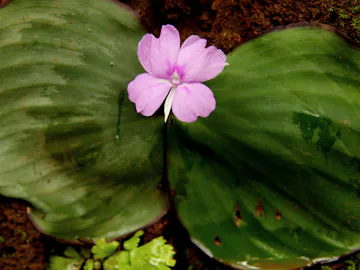
Galangal CO2 select is extracted from the dried rhizomes (underground stems) of Kaempferia galanga, a small tropical plant that is closely related to ginger; it is commonly cultivated in India, Indonesia,[1] and Malaysia for essential oil production and use in skincare, cosmetics, and perfumery. Common names for Kaempferia galanga are False Galangal, False Ginger, Small Galangal, Maraba, and Resurrection Lily.[2] It is one of several galangal species, with the presumed true galangal being Alpinia galanga.[3]
One of the main constituents of Galangal CO2 is (E)-p-methoxycinnamate,[4] and in this respect it is quite similar in aroma to the essential oil from the rhizomes of Hedychium spicatum – common name Ginger Lily.[5] Other principal constituents are pentadecane and ethyl cinnamate.[6] It is an enlivening addition to muscle and joint massage blends, chest rubs, and skincare preparations.
1 Arctander, Steffen. Perfume and Flavor Materials of Natural Origin, 1960, p. 322.
2 Tisserand, Robert and Rodney Young. Essential Oil Safety, 2nd ed., 2014, p. 345.
3 Arctander, Steffen. Perfume and Flavor Materials of Natural Origin, 1960, p. 322.
4 Industry communication.
5 Arctander, Steffen. Perfume and Flavor Materials of Natural Origin, 1960, p. 322.
6 Industry communication.