

Solubility & Blending Suggestions

  • Dilute before use and add drop by drop to your blends until the desired effect is achieved.
  • Soluble in both fixed (carrier) oils and 190 proof alcohol; not soluble in water.
  • Mastic essential oil “is occasionally used in citrus colognes, lavender-fougères, etc. as a topnote ingredient, lending a certain naturalness and a bitter-balsamic tonality to these perfume types.”*
  • *Arctander, Steffen. Perfume and Flavor Materials of Natural Origin, 1960, p. 402.

    Suggested Resources

    • L’Aromathérapie Exactement, Pierre Franchomme and Dr. Daniel Pénoël, 1990, p. 390.
    • Contemporary French Aromatherapy, Dominique Baudoux, 2020, pp. 322-25.
    • Advanced Aromatherapy – The Science of Essential Oil Therapy, Kurt Schnaubelt, 1995, p. 79.
    • The Encyclopedia of Essential Oils, Julia Lawless, 2013, pp. 135-6.

    Mastic Leaf / Branch - Organic EO

    Pistacia lentiscus L.

    (0)
    $8.75

    Contact us for bulk inquiries.

    Botanical NamePistacia lentiscus L.
    Suggested UseAromatherapy,Perfumery, Cosmetics, Soap Making, Candle Crafting
    INCI NamePistacia Lentiscus Leaf Oil
    CAS Number90082-82-9
    OriginMorocco
    Extraction MethodSteam Distilled
    CultivationCertified Organic
    Plant Partleaves.
    Notetop, middle.
    Aroma Familygreen.
    Aroma ProfileEarthy, green, radiant, balsamic, sweet coniferous-turpentine-like aroma with highly aromatic, warm, woody tonalities.
    AppearanceColorless to pale yellow, transparent, mobile liquid.
    Shipping Restriction3 – Flammable

    Safety Considerations

    • No known safety concerns.*
    • Dilute before using. A patch test should be performed before use for those with sensitive skin.
    • Keep in cool, dark place away from heat and light.
    • *Tisserand, Robert and Rodney Young. Essential Oil Safety, 2nd ed., 2014, p. 349.

    Mastic Leaf / Branch - Organic EO

    Pistacia lentiscus L.

    (0)

    Our organic Mastic essential oil (also known as Lentisque, Lentisk) has an earthy, radiant, herbaceous, balsamic, sweet coniferous-turpentine-like aroma with highly aromatic, warm, woody tonalities. The distinct green note can be especially strong when first distilled, but softens with time.

    Size

    Selected size SKU:598-33 - Mastic Leaf / Branch - Organic 1 ml

    $ 8.75
    $8.75
    Details
    Solubility & Blending Suggestions
    Suggested Resources
    Safety Considerations
    Certificates of Analysis (COA)
    Documentation

    Product Overview

    Our organic Mastic essential oil (also known as Lentisque, Lentisk) has an earthy, radiant, herbaceous, balsamic, sweet coniferous-turpentine-like aroma with highly aromatic, warm, woody tonalities. The distinct green note can be especially strong when first distilled, but softens with time.

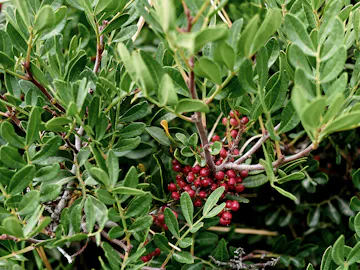
    Mastic oil is sourced from the aromatic leaves and branches of Pistacia lentiscus, a graceful and resilient evergreen tree that has populated picturesque and legendary groves on the Greek island of Chios since medieval times. This hardy tree is a member of the Sumac family and is adaptable to some of the most inhospitable environments, including arid, rocky, saline, limestone and generally poor soils.

    Many of our respected Greek scholars and philosophers as early as the 5th century BCE – including Hippocrates, Herodotus, Dioscorides and Galen – described the benefits of Mastic. The oleoresin (gum) was a central ingredient in the Egyptian Kyphi incense and was burned ceremonially and as an accompaniment to meditation. Chemically, the essential oil sourced from Mastic leaves and branches varies significantly from that of the traditional oleoresin. Generous in monoterpenes, particularly α- and β-pinenes, it currently has a wide range of applications in cosmetics, skin care and perfumery.

    Product Overview

    Our organic Mastic essential oil (also known as Lentisque, Lentisk) has an earthy, radiant, herbaceous, balsamic, sweet coniferous-turpentine-like aroma with highly aromatic, warm, woody tonalities. The distinct green note can be especially strong when first distilled, but softens with time.

    Mastic oil is sourced from the aromatic leaves and branches of Pistacia lentiscus, a graceful and resilient evergreen tree that has populated picturesque and legendary groves on the Greek island of Chios since medieval times. This hardy tree is a member of the Sumac family and is adaptable to some of the most inhospitable environments, including arid, rocky, saline, limestone and generally poor soils.

    Many of our respected Greek scholars and philosophers as early as the 5th century BCE – including Hippocrates, Herodotus, Dioscorides and Galen – described the benefits of Mastic. The oleoresin (gum) was a central ingredient in the Egyptian Kyphi incense and was burned ceremonially and as an accompaniment to meditation. Chemically, the essential oil sourced from Mastic leaves and branches varies significantly from that of the traditional oleoresin. Generous in monoterpenes, particularly α- and β-pinenes, it currently has a wide range of applications in cosmetics, skin care and perfumery.

    Blends Well With

    logo

    2026-03-27

    Why You Need Mushroom in Your Perfume

    There’s a dirty little secret known to experienced perfumers: the most intriguing fragrances always contain something a little ‘off.’ Historically, formulators used animal-derived aromas like ambergris, civet, and castoreum, now mostly replaced by synthetic versions. But perfumers still rely on the funky facets in botanicals...

    logo

    2026-03-20

    DIY Spring Cleaning with Essential Oils

    Riding the wave of spring renewal, this is the time many of us feel inspired to refresh and reset our living spaces. Essential oils offer an effective and enjoyable way to approach our spring cleaning, providing a natural alternative to products made with harsh chemicals or synthetic fragrances.

    logo

    2026-03-13

    Essential Oils for Good Luck and Prosperity

    The month of March has long been associated with good fortune across many cultures. Along with the arrival of spring comes a natural flow toward new beginnings, awakenings, rejuvenation, and hope.