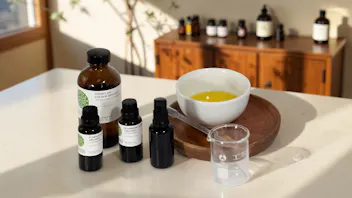
Solubility & Blending Suggestions

  • Dilute well and add drop by drop to your blends until the desired effect is achieved.
  • Soluble in fixed (carrier) oils and alcohol.
  • Bitter Almond essential oil blends well "with anisic-balsamic types of odor, for example in lilac and other sweet florals."* This oil has no fixative value because it is highly volatile** thus the aroma fades very quickly, but the addition of vanillin [as found in Vanilla Absolute and Vanilla CO2] "may greatly improve the tenacity and stability of the oil."***
  • *Arctander, Steffen. Perfume and Flavor Materials of Natural Origin, 1960, p. 53.

    **Ibid.

    ***Ibid.

    Suggested Resources

    • Perfume and Flavor Materials of Natural Origin, Steffen Arctander, 1960, p. 51-54.

    Almond, Bitter EO

    Prunus armeniaca L.

    (13)

    SKU 59-G sizes:

    1 ml (1/30 oz)
    $6.00
    5 ml (1/6 oz)
    $25.25
    15 ml (1/2 oz)
    $58.50
    30 ml (1 oz)
    $104.50
    59.14 ml (2 oz)
    $191.50
    118.29 ml (4 oz)
    $350.00
    236.58 ml (8 oz)
    $647.00

    Contact us for bulk inquiries.

    Botanical NamePrunus armeniaca L.
    Suggested UsePerfumery, Soapmaking, Candle Crafting
    INCI NamePrunus Armeniaca Kernel Oil
    CAS Number90320-35-7
    OriginMorocco
    Extraction MethodHydrodistilled
    CultivationConventional
    Plant Partkernels.
    Notetop, middle.
    Aroma Familygourmand, powdery.
    Aroma ProfileSweet, nutty, intense aroma of almonds reminiscent of marzipan and almond extract, with strong notes of cherry.
    AppearanceColorless, transparent, mobile liquid.
    Shipping Restriction9 – Misc. Hazard

    Safety Considerations

    • None known. Old or oxidized oil should be avoided,* therefore refrigeration is highly recommended.
    • PLEASE NOTE: this product is FFPA (Free from Prussic Acid) for your safety. NOT FOR INGESTION. Keep out of reach of children.
    • Dilute before using. A patch test should be performed before use for those with sensitive skin.
    • True Bitter Almond essential oil oxidizes very rapidly upon exposure to air and will form crystals of benzoic acid right before your eyes, therefore we recommend keeping this oil refrigerated and tightly capped.
    • *Tisserand, Robert and Rodney Young. Essential Oil Safety, 2nd ed., 2014, pp. 191-2.

    Almond, Bitter EO

    Prunus armeniaca L.

    (13)

    Bitter Almond essential oil has the sweet, nutty, intense aroma of almonds reminiscent of marzipan and almond extract, with strong notes of cherry. The oil has been rectified to remove the naturally occurring, toxic prussic acid.

    Size

    Selected size SKU:59-016 - Almond, Bitter 15 ml (1/2 oz) (w/ orifice reducer)

    1 ml (1/30 oz)
    $6.00
    Out of stock
    5 ml (1/6 oz)
    $25.25
    Out of stock
    with orifice reducer
    15 ml (1/2 oz)
    $58.50
    Out of stock
    with orifice reducer
    30 ml (1 oz)
    $104.50
    Out of stock
    59.14 ml (2 oz)
    $191.50
    Out of stock
    118.29 ml (4 oz)
    $350.00
    Out of stock
    236.58 ml (8 oz)
    $647.00
    Out of stock
    Details
    Solubility & Blending Suggestions
    Suggested Resources
    Safety Considerations
    Certificates of Analysis (COA)
    Documentation

    Product Overview

    Bitter Almond essential oil has the sweet, nutty, intense aroma of almonds reminiscent of marzipan and almond extract, with strong notes of cherry. The oil has been rectified to remove the naturally occurring, toxic prussic acid.

    Our Bitter Almond essential oil is a delightful addition to any perfumer’s aromatic palette. Unlike its cousin the Sweet Almond and the extract of almonds, Bitter Almonds naturally contain traces of prussic acid (also known as hydrogen cyanide) making them ultimately lethal to ingest and a good thing to avoid. Our Bitter Almond essential oil is steam distilled from crushed and pressed apricot kernels (it can also be extracted from the kernels of cherries, plums and peaches[1]), then rectified to remove the toxic prussic acid. However, this oil is still NOT SUITABLE FOR INGESTION in any way and must be used with caution as it can cause severe skin irritation in sensitive individuals.

    Benzaldehyde, the primary constituent in Bitter Almond essential oil, has a long history of commercial use in fragrances. One of the classic gourmand aromas, Bitter Almond oil smells like marzipan (almond paste) heaven – rich, intense and very food-like. It lends a sweet, nutty, cherry-like top note to natural perfumes, and a seductive and alluring nuance to men’s colognes.[2] 
    1 Arctander, Steffen.  Perfume and Flavor Materials of Natural Origin, 1960, p. 51.

    2 https://www.youtube.com/watch?v=XF_KCTYkoPg 

    Product Overview

    Bitter Almond essential oil has the sweet, nutty, intense aroma of almonds reminiscent of marzipan and almond extract, with strong notes of cherry. The oil has been rectified to remove the naturally occurring, toxic prussic acid.

    Our Bitter Almond essential oil is a delightful addition to any perfumer’s aromatic palette. Unlike its cousin the Sweet Almond and the extract of almonds, Bitter Almonds naturally contain traces of prussic acid (also known as hydrogen cyanide) making them ultimately lethal to ingest and a good thing to avoid. Our Bitter Almond essential oil is steam distilled from crushed and pressed apricot kernels (it can also be extracted from the kernels of cherries, plums and peaches[1]), then rectified to remove the toxic prussic acid. However, this oil is still NOT SUITABLE FOR INGESTION in any way and must be used with caution as it can cause severe skin irritation in sensitive individuals.

    Benzaldehyde, the primary constituent in Bitter Almond essential oil, has a long history of commercial use in fragrances. One of the classic gourmand aromas, Bitter Almond oil smells like marzipan (almond paste) heaven – rich, intense and very food-like. It lends a sweet, nutty, cherry-like top note to natural perfumes, and a seductive and alluring nuance to men’s colognes.[2] 

    1 Arctander, Steffen.  Perfume and Flavor Materials of Natural Origin, 1960, p. 51.

    2 https://www.youtube.com/watch?v=XF_KCTYkoPg 

    logo

    2026-03-27

    Why You Need Mushroom in Your Perfume

    There’s a dirty little secret known to experienced perfumers: the most intriguing fragrances always contain something a little ‘off.’ Historically, formulators used animal-derived aromas like ambergris, civet, and castoreum, now mostly replaced by synthetic versions. But perfumers still rely on the funky facets in botanicals...

    logo

    2026-03-20

    DIY Spring Cleaning with Essential Oils

    Riding the wave of spring renewal, this is the time many of us feel inspired to refresh and reset our living spaces. Essential oils offer an effective and enjoyable way to approach our spring cleaning, providing a natural alternative to products made with harsh chemicals or synthetic fragrances.

    logo

    2026-03-13

    Essential Oils for Good Luck and Prosperity

    The month of March has long been associated with good fortune across many cultures. Along with the arrival of spring comes a natural flow toward new beginnings, awakenings, rejuvenation, and hope.