Solubility & Blending Suggestions

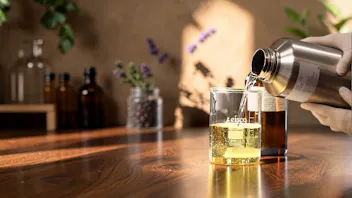
  • Dilute before use and add drop by drop to your blends until the desired effect is achieved.
  • Soluble in both fixed (carrier) oils and 190 proof alcohol; not soluble in water.
  • Suggested Resources

    • Essential Oils – A Handbook for Aromatherapy Practice, Jennifer Peace Rhind, 2012, pp. 165, 289.
    • Contemporary French Aromatherapy, Dominique Baudoux, 2020, pp. 329-32.
    • Aromatherapy for Health Professionals, 2nd ed., Shirley and Len Price, 1995/1999, pp. 332-3.
    • The Complete Guide to Aromatherapy, 3rd ed., Vol. 1, Salvatore Battaglia, 2018, pp. 412-417.
    • The Encyclopedia of Essential Oils, Julia Lawless, 2013, pp. 136-7.

    Melissa - Organic EO

    Melissa officinalis L.

    (6)

    SKU 601-G sizes:

    1 ml (1/30 oz)
    $17.00
    2 ml (1/15 oz)
    $29.25
    5 ml (1/6 oz)
    $62.25
    15 ml (1/2 oz)
    $155.00
    30 ml (1 oz)
    $280.50
    59.14 ml (2 oz)
    $512.50
    118.29 ml (4 oz)
    $942.00

    Contact us for bulk inquiries.

    Botanical NameMelissa officinalis L.
    Suggested UseAromatherapy,Perfumery, Cosmetics
    INCI NameMelissa Officinalis (Melissa) Leaf Oil
    CAS Number84082-61-1
    OriginVarious
    Extraction MethodSteam Distilled
    CultivationCertified Organic
    Plant Partleaves.
    Notetop, middle.
    Aroma Familycitrus, green.
    Aroma ProfileFresh, lemony, somewhat tart yet sweet, green-herbaceous aroma with subtle notes of mint and honey.
    AppearancePale yellow, transparent, mobile liquid.
    Shipping Restriction0 – Non-Hazardous

    Safety Considerations

    • If you have a medical condition or are taking medication, please consult with a physician before use. Avoid during pregnancy or breastfeeding.
    • Skin sensitization – avoid use on hypersensitive or damaged skin, and on children less than 2 years of age.
    • A maximum dermal use level of 0.63% is recommended (IFRA).*
    • Dilute before using. A patch test should be performed before use for those with sensitive skin.
    • *8 Tisserand, Robert and Rodney Young. Essential Oil Safety, 2nd ed., 2014, pp. 350-1.

    Melissa - Organic EO

    Melissa officinalis L.

    (6)

    Our organic Melissa has a fresh, lemony, somewhat tart yet sweet, green-herbaceous aroma with subtle notes of mint and honey. Melissa officinalis is a perennial herb that is also known as Balm or Lemon Balm.

    Size

    Selected size SKU:601-016 - Melissa - Organic 15 ml (1/2 oz) (w/ orifice reducer)

    1 ml (1/30 oz)
    $17.00
    2 ml (1/15 oz)
    $29.25
    5 ml (1/6 oz)
    $62.25
    with orifice reducer
    15 ml (1/2 oz)
    $155.00
    with orifice reducer
    30 ml (1 oz)
    $280.50
    59.14 ml (2 oz)
    $512.50
    118.29 ml (4 oz)
    $942.00
    $17.00
    Details
    Solubility & Blending Suggestions
    Suggested Resources
    Safety Considerations
    Certificates of Analysis (COA)
    Documentation

    Product Overview

    Our organic Melissa has a fresh, lemony, somewhat tart yet sweet, green-herbaceous aroma with subtle notes of mint and honey. Melissa officinalis is a perennial herb that is also known as Balm or Lemon Balm.

    This fast-growing plant from the Mint family (Lamiaceae) has small, white flowers abundantly filled with nectar that are especially attractive to bees, thus its name, Melissa – melittena in Greek for 'honey bee'.[1] One source states that the local name for the plant in many countries of central and southern Europe is 'heart's delight'.[2] An exceptionally low yield (about 0.05%) makes Melissa a very costly oil and one that is commonly adulterated with inexpensive oils like Lemongrass, Citronella and Litsea Cubeba.[3],[4] French producers noted that, in 1988, while world production of Melissa oil amounted to no more than 50 pounds, sales of over 1,000 pounds were recorded![5]

    There's a gentle power in this unique essential oil, according to Gabriel Mojay, who expounds upon the enlivening lemon-fresh, honey-like sweetness of aroma.[6] Melissa blends particularly well with Bergamot in elevating room sprays, or with Lavender in nighttime linen sprays. A Melissa-Rose (highly diluted) lotion for hand massage is a lovely treat for the elderly.[7]

    1 Mojay, Gabriel. Aromatherapy for Healing the Spirit, 1996, p. 96.

    2 Arctander, Steffen. Perfume and Flavor Materials of Natural Origin, 1960, p. 411.

    3 Lavabre, Marcel. Aromatherapy Workbook, Marcel Lavabre, 1997, pp. 85-6.

    4 Arctander, Steffen. Perfume and Flavor Materials of Natural Origin, 1960, pp. 411-412.

    5 Lavabre, Marcel. Aromatherapy Workbook, Marcel Lavabre, 1997, p. 86.

    6 Mojay, Gabriel. Aromatherapy for Healing the Spirit, 1996, p. 97.

    7 Private communication.
    Product Overview

    Our organic Melissa has a fresh, lemony, somewhat tart yet sweet, green-herbaceous aroma with subtle notes of mint and honey. Melissa officinalis is a perennial herb that is also known as Balm or Lemon Balm.

    This fast-growing plant from the Mint family (Lamiaceae) has small, white flowers abundantly filled with nectar that are especially attractive to bees, thus its name, Melissa – melittena in Greek for 'honey bee'.[1] One source states that the local name for the plant in many countries of central and southern Europe is 'heart's delight'.[2] An exceptionally low yield (about 0.05%) makes Melissa a very costly oil and one that is commonly adulterated with inexpensive oils like Lemongrass, Citronella and Litsea Cubeba.[3],[4] French producers noted that, in 1988, while world production of Melissa oil amounted to no more than 50 pounds, sales of over 1,000 pounds were recorded![5]

    There's a gentle power in this unique essential oil, according to Gabriel Mojay, who expounds upon the enlivening lemon-fresh, honey-like sweetness of aroma.[6] Melissa blends particularly well with Bergamot in elevating room sprays, or with Lavender in nighttime linen sprays. A Melissa-Rose (highly diluted) lotion for hand massage is a lovely treat for the elderly.[7]

    1 Mojay, Gabriel. Aromatherapy for Healing the Spirit, 1996, p. 96.

    2 Arctander, Steffen. Perfume and Flavor Materials of Natural Origin, 1960, p. 411.

    3 Lavabre, Marcel. Aromatherapy Workbook, Marcel Lavabre, 1997, pp. 85-6.

    4 Arctander, Steffen. Perfume and Flavor Materials of Natural Origin, 1960, pp. 411-412.

    5 Lavabre, Marcel. Aromatherapy Workbook, Marcel Lavabre, 1997, p. 86.

    6 Mojay, Gabriel. Aromatherapy for Healing the Spirit, 1996, p. 97.

    7 Private communication.

    Blends Well With

    logo

    2026-03-27

    Why You Need Mushroom in Your Perfume

    There’s a dirty little secret known to experienced perfumers: the most intriguing fragrances always contain something a little ‘off.’ Historically, formulators used animal-derived aromas like ambergris, civet, and castoreum, now mostly replaced by synthetic versions. But perfumers still rely on the funky facets in botanicals...

    logo

    2026-03-20

    DIY Spring Cleaning with Essential Oils

    Riding the wave of spring renewal, this is the time many of us feel inspired to refresh and reset our living spaces. Essential oils offer an effective and enjoyable way to approach our spring cleaning, providing a natural alternative to products made with harsh chemicals or synthetic fragrances.

    logo

    2026-03-13

    Essential Oils for Good Luck and Prosperity

    The month of March has long been associated with good fortune across many cultures. Along with the arrival of spring comes a natural flow toward new beginnings, awakenings, rejuvenation, and hope.