5 min read
2024-07-22
Essential Oils for Supporting Scalp and Hair
Written By: Robin Lander
When seeking natural scalp care solutions, there are many essential oils and vegetal carrier oils that offer skin conditioning properties to support your scalp and hair.
When used regularly, these natural oils can help cleanse and clarify the scalp, restore balance to sebum (oil), moisturize dry scalp and hair, and improve the appearance of hair and hair growth.
We offer several essential oil and carrier oil ingredients for our customers to formulate their own scalp and hair care preparations. One of the most effective and easiest formulas to make is a Scalp Oil that combines beneficial essential oils in a carrier oil base. This combination allows you to choose the essential oils and carrier oils that provide the properties you’re looking for and the aromas you love.
For the scalp, a 2% dilution of essential oils is typically recommended for the average adult. This is about 15-18 total drops of essential oils per every one ounce of carrier oil. For those with sensitive skin, the elderly, and children over the age of 2, a more suitable dilution is 1% or less, about 6-9 total drops of essential oils per every one ounce of carrier oil. We don’t recommend using essential oils on children under age 2. To learn more about how to dilute essential oils for topical use, see our helpful article on Dilutions Solutions.
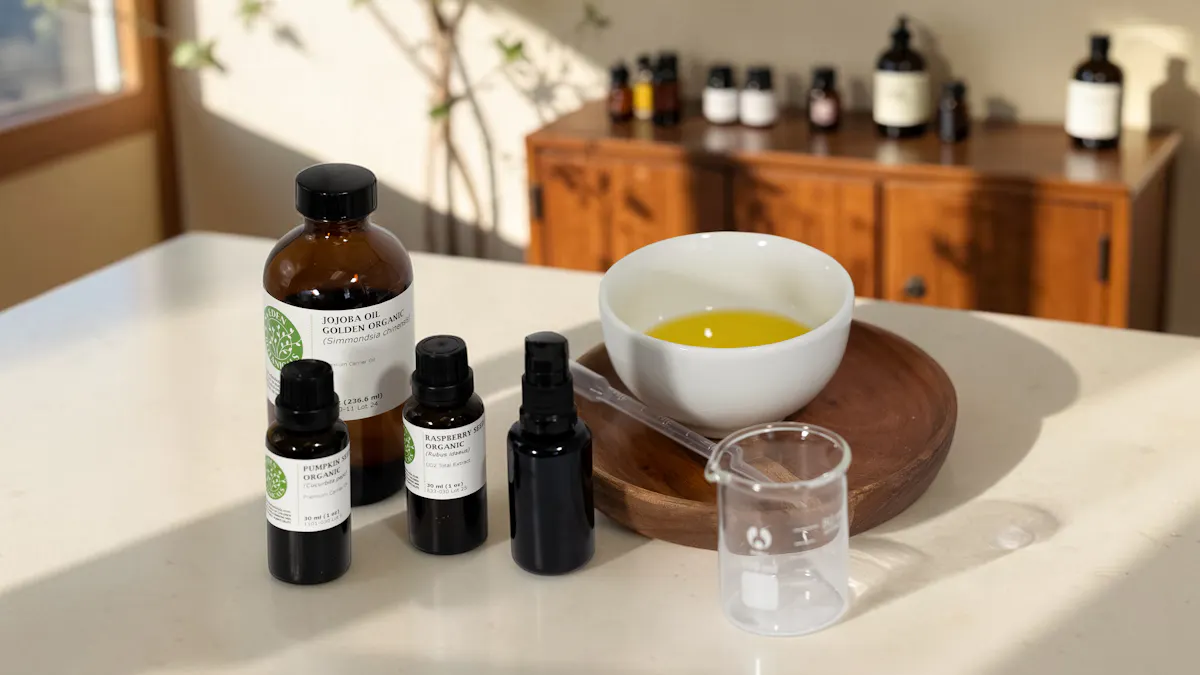
Excellent Carrier Oils for scalp care are Organic Golden Jojoba Oil , Organic Argan Oil, Organic Fractionated Coconut Oil, Organic Plum Kernel Oil and Organic Marula Oil. These oils not only help ‘carry’ the essential oils, but they also provide nourishing vitamins, antioxidants, and moisturization, as well as add beautiful shine to the hair.
Once you’ve decided on your favorite carrier oils, it’s time to choose your essential oils based on your personal scalp needs. Here are some of the top choices:
Essential oils to help invigorate and cleanse hair follicles, eliminate build up, and improve the appearance of hair and hair growth:
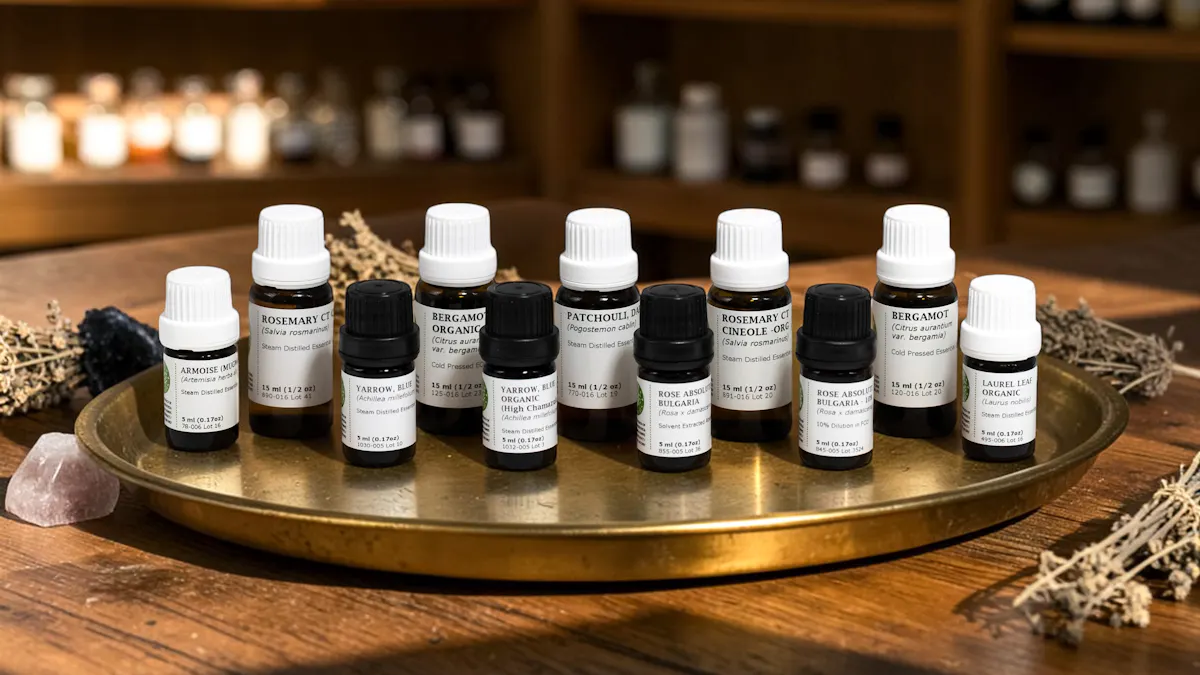
Atlas Cedarwood, Thyme ct Linalol*, Rosemary CT Cineole or Rosemary CT Cineole – Organic, Peppermint, Clary Sage, Tea Tree, Lavender, Laurel Leaf, Wild Manuka
*Be sure to choose the skin-friendly Thyme ct Linalol and not the more aggressive Thyme ct Thymol.
Essential oils for dry scalp:
Atlas Cedarwood, Ylang Ylang III, Lavender, Patchouli, Spikenard, Palmarosa
Essential Oils to help balance oily scalp and hair:
Rose Geranium, Ylang Ylang III, Carrot Seed, Clary Sage
Before choosing to use an essential oil, please review the Safety Considerations on the product page and always check with your physician if you are on medication, are pregnant or nursing, or have a serious medical condition.
Ready to blend? Here is a recipe for a scalp oil using essential oils that have been shown to help with the appearance of hair growth:
Clarifying Scalp Oil for Healthy Hair
Ingredients:
½ oz Organic Golden Jojoba Oil
½ oz Organic Fractionated Coconut Oil
5 drops Rosemary CT Cineole – Organic*
Directions:
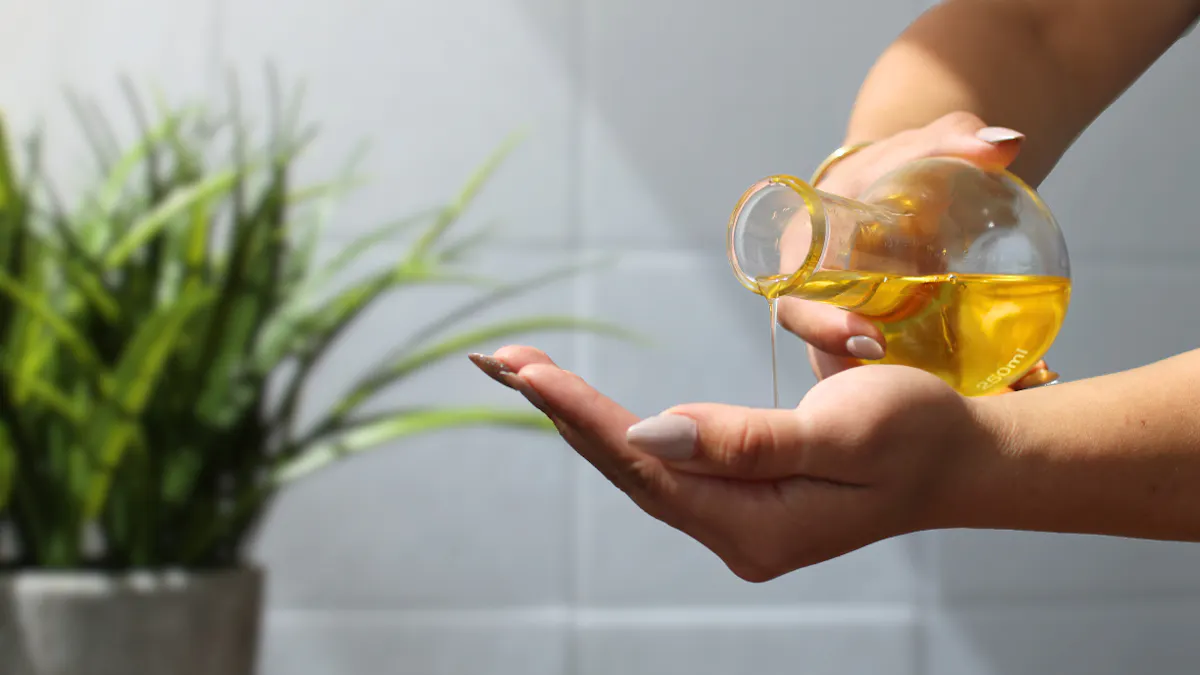
Mix the blend in a small bottle, preferably a glass bottle such as our Miron Glass Bottle with Treatment Pump, and shake well. Dispense about ½-1 teaspoon of the Scalp Oil into the hand, rub palms together, and massage gently into the scalp. Take caution to avoid the eye area. Soak a small hand towel in hot water, wring out well, and wrap over scalp. Cover with a shower cap or dry towel and rest for 30 minutes. The Scalp Oil can be left on the scalp for 1-2 hours if desired, then wash the hair as usual.
*Please note that Rosemary essential oil should be avoided by those with epilepsy, the elderly, or during pregnancy or nursing, and should not be applied to or near the face of infants or children under the age of 5. This Scalp Oil recipe is for adults.
For children over age 2, the elderly, or those with sensitive skin, replace the Rosemary in the above recipe with Tea Tree or Wild Manuka and add the essential oils to 2 ounces of carrier oil to reduce the total essential oil dilution to 1%.
Another method: Add Essential Oils to your Shampoo
Another option is to add 1-2 drops of a single essential oil or an essential oil blend to shampoo as it is in the palm of the hand right before shampooing, then shampoo as usual. This method is preferred over adding the oils directly to your store-bought shampoo bottle which may change the pH balance and degrade your shampoo over time.
Your scalp oil can also be used as an aromatic conditioning oil for hair to help add shine, moisturize, and reduce frizz. After shampooing, simply massage a few drops of your Scalp Oil into the ends of damp hair and style as usual.
Enjoy the feeling of a clean, energized scalp and hair!
We recommend performing a patch test when working with any of our ingredients topically, especially before use on the scalp or face. Please check the Safety Considerations near the bottom of the product page for every oil and always check with your physician before using essential oils if you are on medication or have a serious medical condition.