Solubility & Blending Suggestions

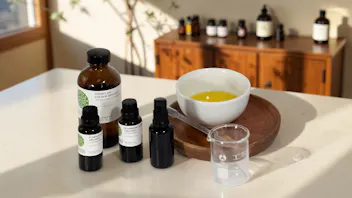
  • Dilute before use and add drop by drop to your blends until the desired effect is achieved.
  • Soluble in both fixed (carrier) oils and 190 proof alcohol; not soluble in water.
  • Filtration may be necessary if naturally occurring waxes present an aesthetic issue in formulations. Please see our FAQ section for details.
  • "Mandarin peel oil is used sparingly in colognes as a modifier for other citrus oils, in neroli bases, in fantasy 'moss' notes, or as [a] particular note for 'special' effects."*
  • *Arctander, Steffen. Perfume and Flavor Materials of Natural Origin, 1960, p. 395.

    Suggested Resources

    • Essential Oils – A Handbook for Aromatherapy Practice, Jennifer Peace Rhind, 2012, pp. 215-6, 289.
    • Aromatherapeutic Blending – Essential Oils in Synergy, Jennifer Peace Rhind, 2016, pp. 228-9.
    • Contemporary French Aromatherapy, Dominique Baudoux, 2020, pp. 315-8.
    • The Encyclopedia of Essential Oils, Julia Lawless, 2013, p. 131.
    • "Mandarin," S Delacourte at sylvaine-delacourte.com, https://www.sylvaine-delacourte.com/en-us/blog/mandarin

    Mandarin, Red EO

    Citrus reticulata Blanco

    (3)

    SKU 585-G sizes:

    Sample 1 ml (1/30 oz)
    $3.00
    15 ml (1/2 oz)
    $11.00
    30 ml (1 oz)
    $18.00
    59.14 ml (2 oz)
    $31.00
    118.29 ml (4 oz)
    $55.00
    236.58 ml (8 oz)
    $98.25
    473.17 ml (16 oz)
    $178.50
    1 kg (2 1/5 lb)
    $397.00

    Contact us for bulk inquiries.

    Botanical NameCitrus reticulata Blanco
    Suggested UseAromatherapy, Perfumery, Cosmetics, Soap Making, Candle Crafting
    INCI NameCitrus Reticulata (Mandarin) Peel Oil
    CAS Number84929-38-4
    OriginItaly
    Extraction MethodCold Pressed
    CultivationConventional
    Plant Partpeel.
    Notetop.
    Aroma Familycitrus, green.
    Aroma ProfileSmooth, sweet-tart citrus aroma typical of Mandarin with a slight floral undertone.
    AppearanceOrange to reddish mobile liquid. This product is filtered by our manufacturer. However, it may be prone to turbidity (cloudiness) due to naturally occurring waxes.
    Shipping Restriction3 – Flammable

    Safety Considerations

    • Skin sensitization if oxidized; old or oxidized oils should be avoided.*
    • Dilute before using. A patch test should be performed before use for those with sensitive skin.
    • Store in a cool, dark place away from heat and light.
    • *Tisserand, Robert and Rodney Young. Essential Oil Safety, 2nd ed., 2014, pp. 342-3.

    Mandarin, Red EO

    Citrus reticulata Blanco

    (3)

    Red Mandarin essential oil is cold pressed from the peel of fully ripened, mature fruits. It is the sweetest of our three Mandarin essential oils; comparatively, our Yellow Mandarin is slightly less sweet and our Green Mandarin is the least sweet and most tart of the three.

    Size

    Selected size SKU:585-016 - Mandarin, Red 15 ml (1/2 oz) (w/ orifice reducer)

    Sample 1 ml (1/30 oz)
    $3.00
    15 ml (1/2 oz)
    $11.00
    with orifice reducer
    30 ml (1 oz)
    $18.00
    59.14 ml (2 oz)
    $31.00
    118.29 ml (4 oz)
    $55.00
    236.58 ml (8 oz)
    $98.25
    473.17 ml (16 oz)
    $178.50
    1 kg (2 1/5 lb)
    $397.00
    $3.00
    Details
    Solubility & Blending Suggestions
    Suggested Resources
    Safety Considerations
    Certificates of Analysis (COA)
    Documentation

    Product Overview

    Red Mandarin essential oil is cold pressed from the peel of fully ripened, mature fruits. It is the sweetest of our three Mandarin essential oils; comparatively, our Yellow MandarinYellow Mandarin is slightly less sweet and our Green MandarinGreen Mandarin is the least sweet and most tart of the three. Our Red Mandarin essential oil has a smooth, sweet-tart citrus aroma typical of this fruit with a slight floral undertone. Its familiar aroma is a real winner with children and is the perfect oil to put in a diffuser or room spray to refresh bed, bath or boudoir. Red Mandarin has an unusual citrus aroma that will add brightness and appeal to your natural perfumery compositions.

    Originating mainly in south China, Mandarins were introduced to Europe in the early 1800s[1] and were brought from Italy to the United States about 1840-50.[2] According to Steffen Arctander, the fruit developed into the small, ellipsoidal Mandarin in Europe but in the United States, the fruit remained quite similar to the Chinese Mandarin and was renamed Tangerine.[3] Guenther notes that there is a marked difference in both the flavor and aroma between the two, as well as the physical properties and chemical compositions, with soil, climate, location, even cultural conditions and considerable hybridization contributing to the differences.4 For expression of the oil, harvest of the fruit before reaching maturity occurs from late October through the end of November.[5]

    Like most citrus peel oils, chemical analysis of the Mandarins reveals a limonene dominance plus nearly a dozen tart, citrusy aldehydes at low concentrations that nonetheless contribute significantly to the overall aroma. One thing that distinguishes the Mandarins from Tangerine oils is a small percentage of methyl-N-methyl anthranilate, a nitrogen compound found more abundantly in the leaf oil that contributes to the calming aroma. The simple cheer and sweet warmth of the Mandarins are a boon to the spirit, making their appearance in mid-winter even more welcome.

    1 Arctander, Steffen. Perfume and Flavor Materials of Natural Origin, 1960, p. 394.

    2 Guenther, Ernest. The Essential Oils, Vol. III, 1949, p. 336.

    3 Arctander, Steffen. Perfume and Flavor Materials of Natural Origin, 1960, p. 395.

    4 Guenther, Ernest. The Essential Oils, Vol. III, 1949, p. 335.

    5 Ibid, pp. 336-7.
    Product Overview

    Red Mandarin essential oil is cold pressed from the peel of fully ripened, mature fruits. It is the sweetest of our three Mandarin essential oils; comparatively, our Yellow MandarinYellow Mandarin is slightly less sweet and our Green MandarinGreen Mandarin is the least sweet and most tart of the three. Our Red Mandarin essential oil has a smooth, sweet-tart citrus aroma typical of this fruit with a slight floral undertone. Its familiar aroma is a real winner with children and is the perfect oil to put in a diffuser or room spray to refresh bed, bath or boudoir. Red Mandarin has an unusual citrus aroma that will add brightness and appeal to your natural perfumery compositions.

    Originating mainly in south China, Mandarins were introduced to Europe in the early 1800s[1] and were brought from Italy to the United States about 1840-50.[2] According to Steffen Arctander, the fruit developed into the small, ellipsoidal Mandarin in Europe but in the United States, the fruit remained quite similar to the Chinese Mandarin and was renamed Tangerine.[3] Guenther notes that there is a marked difference in both the flavor and aroma between the two, as well as the physical properties and chemical compositions, with soil, climate, location, even cultural conditions and considerable hybridization contributing to the differences.4 For expression of the oil, harvest of the fruit before reaching maturity occurs from late October through the end of November.[5]

    Like most citrus peel oils, chemical analysis of the Mandarins reveals a limonene dominance plus nearly a dozen tart, citrusy aldehydes at low concentrations that nonetheless contribute significantly to the overall aroma. One thing that distinguishes the Mandarins from Tangerine oils is a small percentage of methyl-N-methyl anthranilate, a nitrogen compound found more abundantly in the leaf oil that contributes to the calming aroma. The simple cheer and sweet warmth of the Mandarins are a boon to the spirit, making their appearance in mid-winter even more welcome.

    1 Arctander, Steffen. Perfume and Flavor Materials of Natural Origin, 1960, p. 394.

    2 Guenther, Ernest. The Essential Oils, Vol. III, 1949, p. 336.

    3 Arctander, Steffen. Perfume and Flavor Materials of Natural Origin, 1960, p. 395.

    4 Guenther, Ernest. The Essential Oils, Vol. III, 1949, p. 335.

    5 Ibid, pp. 336-7.

    Blends Well With

    logo

    2026-03-27

    Why You Need Mushroom in Your Perfume

    There’s a dirty little secret known to experienced perfumers: the most intriguing fragrances always contain something a little ‘off.’ Historically, formulators used animal-derived aromas like ambergris, civet, and castoreum, now mostly replaced by synthetic versions. But perfumers still rely on the funky facets in botanicals...

    logo

    2026-03-20

    DIY Spring Cleaning with Essential Oils

    Riding the wave of spring renewal, this is the time many of us feel inspired to refresh and reset our living spaces. Essential oils offer an effective and enjoyable way to approach our spring cleaning, providing a natural alternative to products made with harsh chemicals or synthetic fragrances.

    logo

    2026-03-13

    Essential Oils for Good Luck and Prosperity

    The month of March has long been associated with good fortune across many cultures. Along with the arrival of spring comes a natural flow toward new beginnings, awakenings, rejuvenation, and hope.