
4 min read
2023-04-21
Ylang Ylang - An Offering for Every Application
Written By: Robin Lander
There is something captivating about the aroma of Ylang Ylang that piques the senses, warms the heart, and elevates the spirit. Sweet, heady and joyful, the euphoric floral is practically a perfume in itself, offering a variety of rich, creamy, tropical, slightly spicy, woody, and sensual nuances. The stunning fresh flowers are steam-distilled, or solvent extracted, to produce oils that highlight various aromatic facets. Powerful and intense, all Ylang Ylang oils lend natural lift and fixative qualities, helping to impart longevity to aromatic creations while also adding depth, texture, and a bit of mystery.
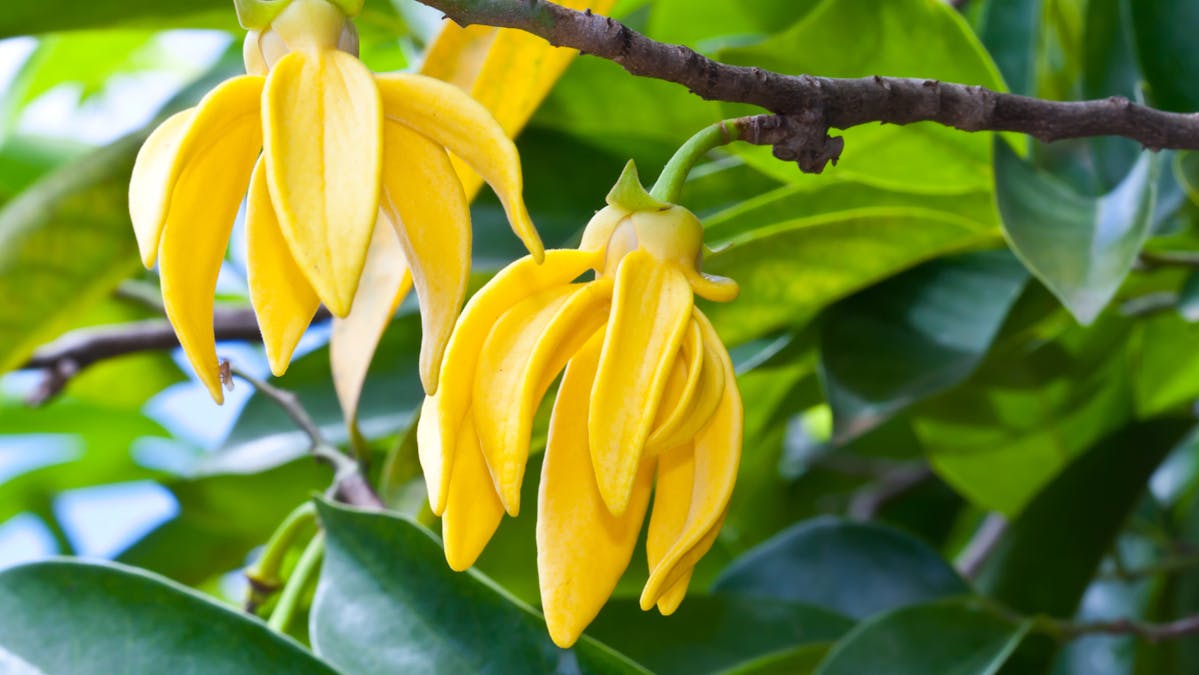
Native to Indonesia and the Philippines, the Ylang Ylang or Cananga Tree is a tropical evergreen now almost exclusively cultivated in a tiny corner of the Indian Ocean – The Comoros Archipelago and Madagascar – where oil from the large, drooping, yellow-green flowers is a major export. We are proud to offer seven different and exceptional Ylang Ylang oils, most of which are produced from flowers grown on our organic farm in Northwestern Madagascar. Over 250 acres are dedicated to Ylang Ylang, produced by organic farming and Fair For Life certified production methods.
Ylang Ylang essential oil is produced by a special process of fractional distillation. This is achieved by repeatedly stopping distillation after a specific time and density is reached and collecting the condensed volatiles, or fractions, separately at each stage. Each fraction has its own characteristics and suitability for different applications. But one thing is for certain, Ylang Ylang will enchant and delight, whether it’s the magic ingredient in your perfumes, softening skin serums, luxurious soaps and candles, or nighttime aromatherapy blends.
Our Ylang Ylang Offerings Defined
Named ‘Extra’ for being the first fraction, and historically the most desirable, this oil is collected exclusively from the first 1-2 hours of distillation, capturing the heaviest aromatic molecules. Highly floral, fruity, and ethereal with a creamy sweetness, it is preferred for high-end perfumery and is best paired with other oils where it provides outstanding lift and brightness.
Slightly lighter volatile compounds are collected in this fraction after distilling for 3-4 hours. This yields a sweeter, smoother, candy-like floral aroma highly valued in cosmetics and personal care formulations.
Distilled for 4-6 hours, this medium weight fraction has a deeper, sweet floral and mildly spicy aroma with more pronounced balsamic undertones. Commonly used in bath and body care, it is both versatile and the most cost-effective option.
Rather than fraction the distillation, this oil is a result of the VOP (Very Old Process) method of continual distillation for 6-7 hours. More refined and elegant then Ylang Ylang I, ll or III, it is intensely sweet, voluptuous and creamy with an impressive depth and complexity that elevates florals in perfumery or transforms aromatherapy blends. Warm and radiant, beautiful in its balance, it is a favorite of perfumers for comprising the best that all Ylang Ylang options have to offer.
The lightest of the fractionated Ylang Ylang oils, and rich in beneficial sesquiterpenes, this fraction is collected after 7-16 hours of distillation. With the deepest aroma and most noticeable woody/balsamic undertones, it is an ideal and economical choice for adding tenacity and depth to soap and candle fragrances.
Ylang Ylang, Complete - Organic
The result of an unfractionated, ‘complete’ continuous distillation of 18 hours or more, rendering a full spectrum of beneficial and aromatic constituents, this oil is a favorite of aromatherapists. Powerful, extremely sweet, spicy, tropical fruity-floral with a green, woody undertone, it offers incredible complexity and value in skin care, aromatherapy, and natural perfumery compositions. High-end soap makers may prefer the boldness of this Ylang Ylang.
An alternative to distillation, solvent extraction allows for collection of precious non-volatiles in the flower, offering an oil with more uniformity, depth, and tenacity than that of steam distilled oils. With a sweeter, warmer, and ‘velvetier’ aroma that is intensely true to the living flower, it is a must-have floral fixative for any perfumer. Trace amounts can effectively impart lift and body to precious florals such as Jasmine, Rose, Violet, Gardenia, Carnation, Mimosa, and countless others.
Not sure which Ylang Ylang to choose? Consider the intended application and which oil will best support the overall fragrance profile. To give fine florals a boost in perfume, Ylang Ylang Extra or Complete are good choices. To be swept away to a tropical paradise without overpowering, try the otherworldly Ylang Ylang Fine. Cosmetic formulators may prefer Ylang Ylang I while soap and candle crafters may appreciate the depth of Ylang Ylang II or III. Those who desire a consistently true-to-nature aroma won’t want to miss Ylang Ylang Absolute.
Sources:
Perfume and Flavor Materials of Natural Origin, Steffen Arctander, 1960, pp. 664-5.
The Complete Guide to Aromatherapy, 3rd ed., Vol. I, Salvatore Battaglia, 2018, pp. 600-606.
Artisan Perfumery or Being Led by the Nose, Alec Lawless, 2009, p. 76.
Featured Products
There are no products related to this article


