4 min read
Pretty Petitgrain – Leafy Green, Citrus and Floral in One
Written By: Robin Lander
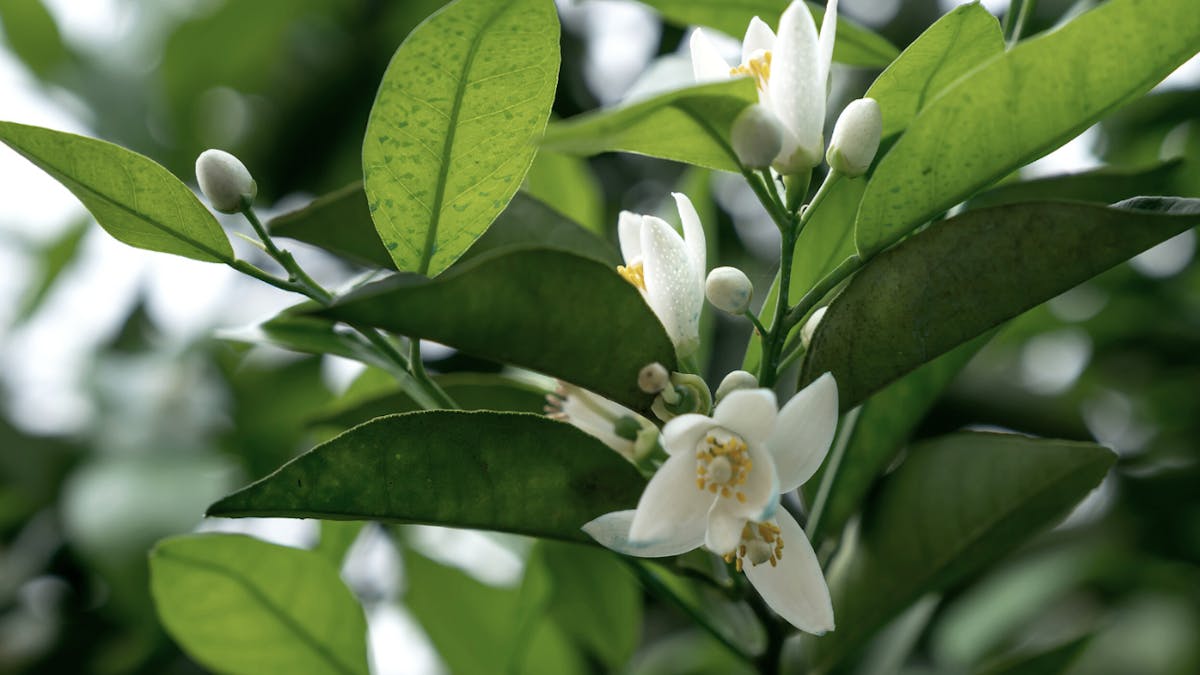
The aroma of our new Petitgrain Bigarade, Paraguay – Organic fills the spirit like a calming ray of sunshine! Steam distilled from the leaves and twigs of the bitter orange tree, the name Petitgrain comes from the French word for ‘little berry,’ referring to the tiny buds of fruit nestled amongst the branches. The true bitter orange tree, Citrus aurantium variety amara, also known as Bigarade orange, may be most famous for its flower oil, Neroli, but Petitgrain’s multifaceted composition brings together the ultimate marriage of leafy, fruity and floral nuances.
Petitgrain essential oil is an underrated yet sophisticated player in perfumery, cosmetics and aromatherapy. Often touted as a less expensive substitute for Neroli, its elegant aroma and beneficial properties certainly hold their own. Thanks to a high content of linalyl acetate and linalool similar to Lavender oil, Petitgrain is a star in calming massage oils, nighttime diffuser blends, fragrant after-shaves, and preparations for oily and sensitive skin. Let’s compare the features of our Petitgrain oils and learn how to upgrade your creations with this versatile wonder.
Petitgrain Bigarade, Paraguay – Organic
Our Petitgrain Bigarade, Paraguay – Organic has a fresh, leafy-green, floral, citrus aroma with soft Neroli-like notes and sweet-woody undertones. Produced from cultivated trees, it’s devoid of the typical sharp top notes found in other Petitgrains from Paraguay, while being sweeter and less bitter-green than our Petitgrain Bigarade – Organic from Morocco. Although it doesn’t contain any of the blossoms, the aroma is similar to Petitgrain sur Fleurs (‘Petitgrain over Flowers’) and has beautiful, etheric floral qualities.Petitgrain sur Fleurs - Conventional
For a softer, more floral character, our Egyptian grown Petitgrain sur Fleurs has a distinct, fresh, green floral, linalyl acetate and terpene-like aroma with a sweet-woody, tenacious undertone. With the name meaning ‘Petitgrain over flowers,’ it is produced from the leaves and twigs near the end of Neroli season when many blossoms still remain on the branches. This inclusion of flowers lends some of Neroli’s benefits to this delightfully fresh and balanced option.Petitgrain Absolute
Solvent extracted at our facility in Morocco, our Petitgrain Absolute has a complex, floral/green leaf aroma with fresh, tart notes of citrus zest, citrus blossom and slight woody undertones. As a middle note in perfumery, it can be used to modify and enhance other floral and citrus notes similar to Lavender Absolute, but with a more fruity/floral and less powdery character.Petitgrain for the Win! A Formulators Guide
Petitgrain has a lot to offer with its refreshing and unique aroma, calming esters, and economical price. Here are our favorite ways to use it:
As a top note in perfumery, its green, floral qualities are popular in citrus colognes and fougères while bringing natural brightness to floral and amber compositions. It’s beautiful with Ylang Ylang, Jasmine, and Orange Blossom Absolute.In aromatic blends, it pairs well with citrus, florals and woods, helping to harmonize Neroli, Bergamot, Mandarin, and Lavender.Blended with Neroli, it’s a more cost-effective way to echo Neroli’s floral character, along with similar comforting and uplifting qualities.In cosmetics, its tonifying nature is beneficial in serums and creams for mature, dry, sensitive, oily or congested skin, after-sun care, scalp care, and cooling lotions. Try it with Atlas Cedarwood, Palmarosa, and Geranium.Aromatherapists adore it in blends for evoking a calming ambiance, in sensual body lotions, and in belly rubs, muscle massage, and bedtime blends and sprays, especially with Roman Chamomile, Sandalwood, and Clary Sage.In soaps and body washes, it brings clarifying, cleansing, and deodorizing properties that go well with Sweet Orange, Tea Tree, and Lemongrass.Next time you’re looking for a green, citrusy, floral-like to aroma to liven up your creations, give Petitgrain a try. Don’t forget to leave a review and share how you’ve used it – we love to hear from you!