6 min read
2024-11-01
In the Light: Essential Oils and Candle Crafting
Written By: Mollie Jensen
Candles are such a wonderful way to illuminate and scent a room. They can set the space for celebration, relaxation or a little romance. When scenting candles with essential oils, it can be a little tricky to find the right amount that will supply a good output of aroma without compromising the integrity of the candle. Here you’ll find some guidelines to help you start your candle crafting journey – combined with a little patience and experimentation, you’ll be on your way to perfecting your creative vision.
For purposes of this article, we are going to focus on container candles and assume that you are using soy wax. There are many other types of waxes you can use, though soy has gained popularity over the years, and for good reason. It has a low melt point which makes for a longer burning and safer candle than paraffin, it burns cleaner and it comes from a highly renewable source. We’re also going to focus on wax temperature and essential oil fragrance. If you want to learn more about types of wicks to use, how to avoid smoking, and other candle making equipment, I suggest checking out the candle making section of Soapmaking Forum.
A little heated
When looking into using essential oils to scent your candles, you may hear about flash point. The flashpoint of an oil is the temperature at which it can combust if exposed to an open flame or spark. The lower the flash point, the higher the combustibility. This doesn’t necessarily speak to the safety of an oil, but rather, how quickly it will evaporate when exposed to heat. Take our Lime - Expressed for instance. This light, fresh and lively top note can add sparkle to the aroma of your candle, but has a low flash point of 120° so doesn’t stick around long when heated. Our Vetiver, Haiti – Organic, on the other hand, is a base note, more viscous and much less volatile with a flash point of 212°. This means it evaporates slower, producing a stronger and longer-lasting scent throw. Keeping flash point in mind when combining your scent blend to include top, middle and base notes will give you a well-rounded aroma, and the higher flash point base notes can act as a fixative to help slow the evaporation of the more volatile top notes. The flash point of our oils can be found on its product profile page under Documentation, section 5 of the Safety Data Sheet (SDS).
Controlling temperature when melting the wax is vital to retaining scent. No matter the melt point of the wax you’re using, it is recommended that you add the fragrance when the wax reaches around 180° - 185°. If the wax is too hot, you run the risk of burning off and degrading the aroma of the essential oils. If the wax is too cool, the essential oils may not disperse uniformly or bind correctly to the wax. If you don’t have a wax melting pot, then a good wax thermometer is essential to correctly gaging optimal temperature.
Frosting on top
Eco-friendly, biodegradable soy wax is made from hydrogenated soybean oil, and is great for container candles. Though if you’re looking for a smooth, even finish be forewarned that soy wax can sometimes have an issue with “frosting.” This may happen when the wax begins to quickly cool and tries to revert to its original form and crystalize, resulting in snowflake-like patterns. Here are some ways to prevent frosting:
If frosting still occurs and you want to remove it, gently heating the area with a heat gun or blow dryer should do the trick. Something important to remember, if your candles do show a little frosting it has no bearing on the quality of the burn or candle fragrance.
The [scent] sweet spot
A good percentage of essential oil to start with is around 3-5%, though it really depends on what level of scent throw you want and the oils you are using. This is where experimentation comes in. You can certainly increase the percentage of aromatic material you use, starting low and then adding more until you’re satisfied with the results. I suggest going up in 1% increments until you reach the level of aroma you want, but no more than 10% total blend (and no more than 3% of very low flashpoint oils, like citrus, in the total blend). It’s important to remember that more isn’t necessarily better, as too much essential oil can degrade the wax and make for a poor burning candle, not to mention a potential fire hazard.
Get carried away
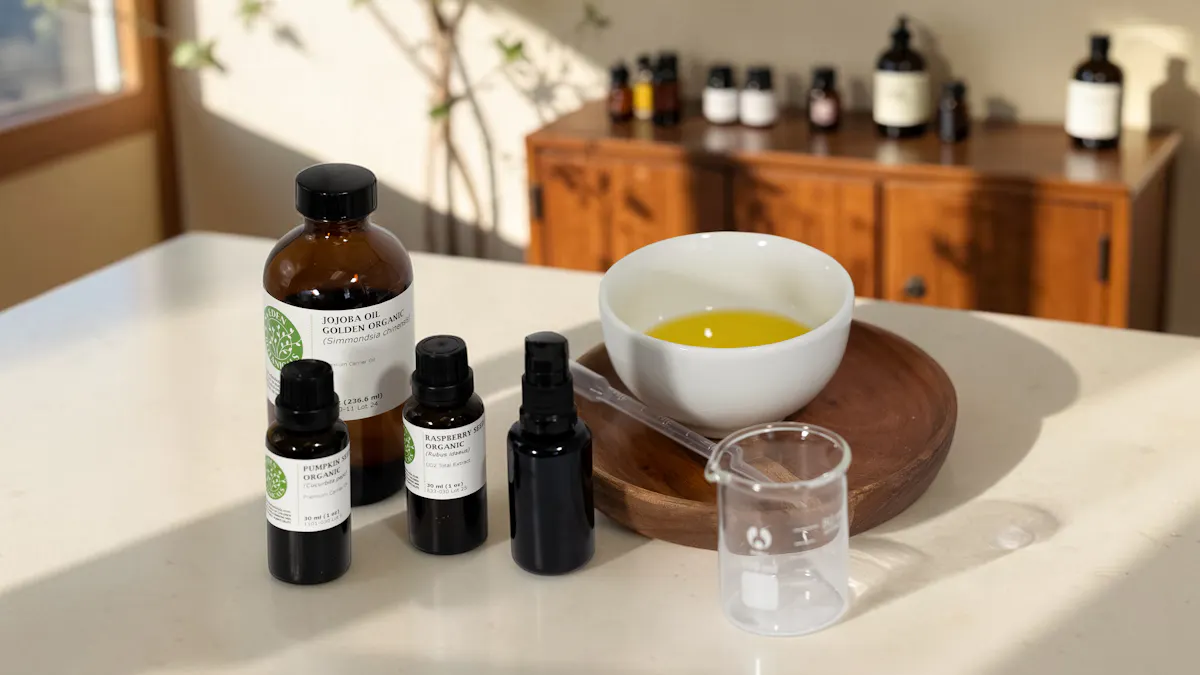
If you have difficulty getting a more viscous essential oils and extracts (such as Absolutes and CO2 Extracts) to disperse into your wax uniformly, one possible remedy is to dilute it into a little carrier oil first, and then add the aromatic blend to the melted wax. Fractionated Coconut Oil (FCO) is a nice choice because it doesn’t have any color or aroma of its own. The essential oil to carrier oil ratio you use depends on the density of the material you’re wanting to incorporate into the candle scent. The thicker the oil, the more FCO. A good place to start is with a 50/50 dilution. Again, this is where experimentation is key. Another way to incorporate thicker or more costly oils into your candle is to use one of our Essential Oil, CO2 Extract or Absolute dilutions. Since these can contain anywhere from 95-70% carrier oil, we commend that they be added at no more than 10% the weight of your wax.
To get you started, here are some blends to play with.
Spicy Blend
12 gm Lime - Expressed (Top note)
9 gm Ginger, Fresh - Organic (Middle note)
4 gm Patchouli, Dark (Base note)
Woody Blend
2 gm Ylang Ylang, Fine - Organic (Top/middle note)
13 gm Cedarwood, Texas (Middle note)
10 gm Balsam of Peru (Base note)
Refreshing Blend
7 gm Peppermint France – Organic (Top note)
15 gm Lavender, Bulgaria - Organic (Middle note)
3 gm Vetiver, Haiti - Organic (Base note)
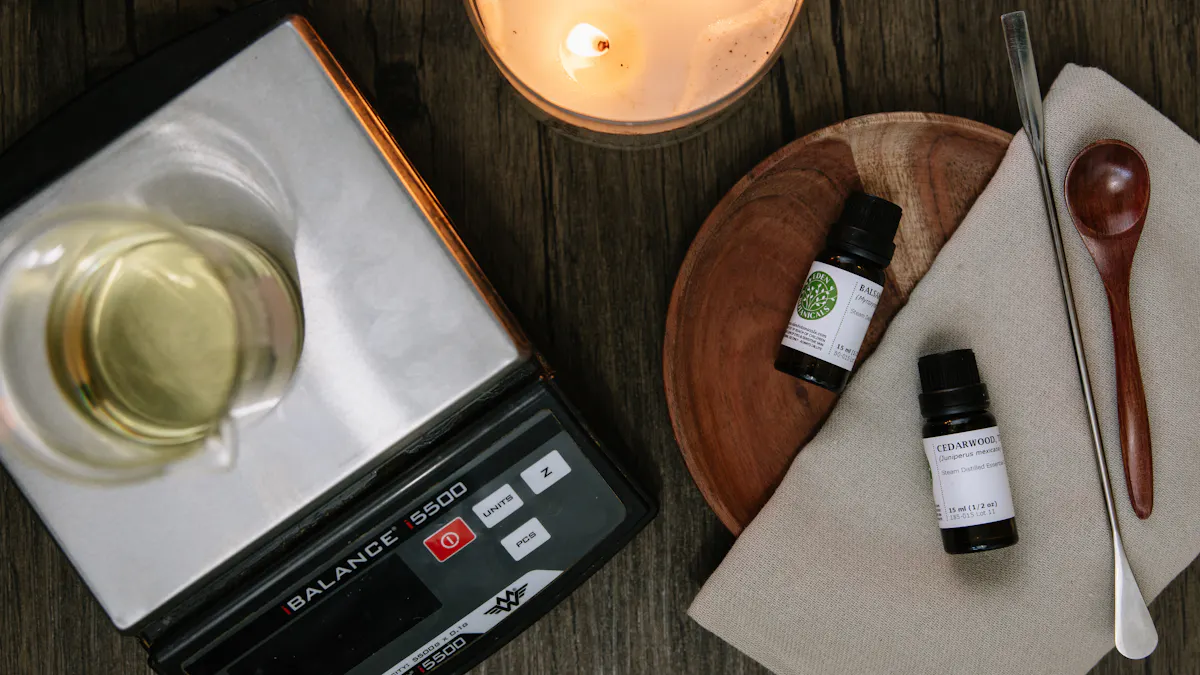
Instructions: Using Measuring Stem Pipettes, measure out the portions of each oil into a small beaker or bowl. Heat 500 grams of wax (approximately four 6 oz candles) to 180° - 185° and add the fragrance blend, stirring to combine. The recipes above will give you 5% fragrance ratio to the wax base. Allow the wax to cool to below 130° before pouring into containers to avoid frosting.
Remember to have fun and always start by testing small batches before scaling up and keep detailed records so you can reference what worked and what didn’t.
Enjoy!