5 min read
2025-06-05
How to Assess Aromatics Like a Pro: tips and tricks for success
Written By: Robin Lander
If you love working with aromas as much as we do, there's nothing quite like the excitement of receiving a new essential oil or absolute! That first encounter with a freshly opened bottle can be a deeply inspiring and transformative experience. But it can also come with a few surprises. How do you know if you’re getting an accurate first impression of the scent? And how might the aroma evolve, especially once applied to the skin?
When working with essential oils and absolutes, proper aromatic assessment is key to successful formulation. These materials are highly concentrated, and how you evaluate them can shape your first impression, influence how you choose to use them, and help predict how they’ll perform in your formula. Not to worry – we’ll share some techniques used by professional perfumers and formulators to help you get started on the right note.
Always Use a Fragrance Tester Strip
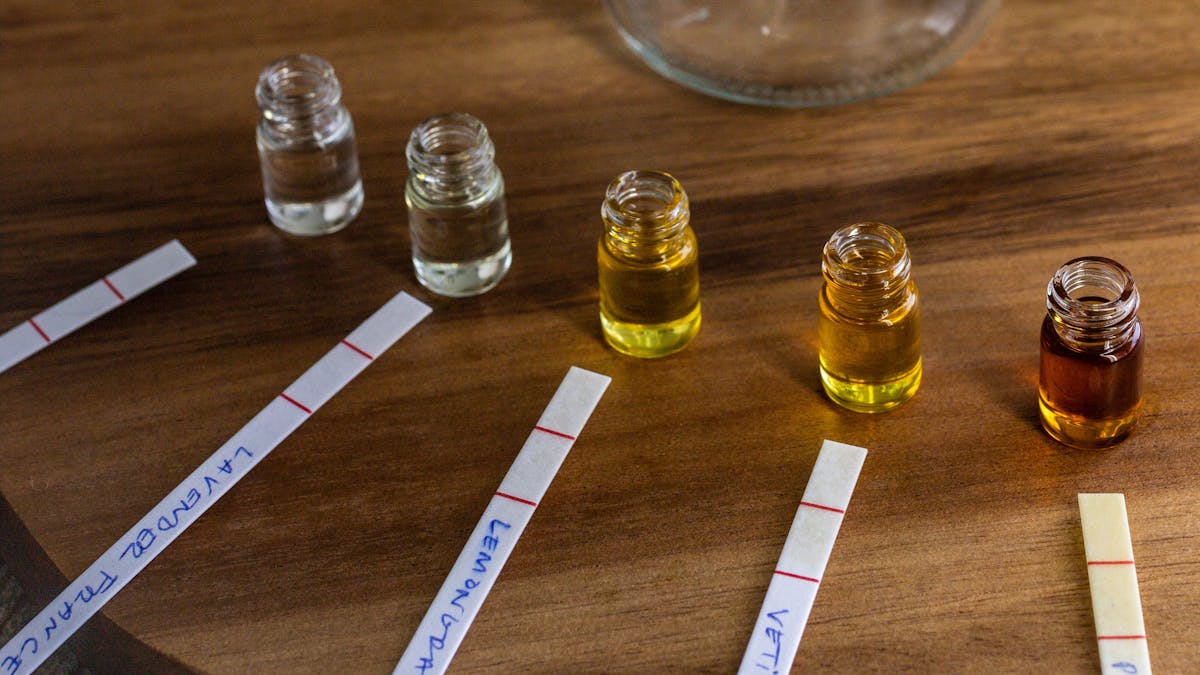
One of the most effective tools for assessing aromas are fragrance tester strips, thin slips of a special absorbent and porous paper. In a pinch, a simple strip of clean coffee filter or watercolor paper will do. This method is far superior to sniffing directly from the bottle, where the concentration of volatiles can overwhelm your olfactory receptors, making it hard to get a true sense of the oil’s character.
When it comes to thicker, denser materials like Sandalwood or Vetiver, fragrance tester strips allow the heavier, slower-to-evaporate aromatic molecules to become more diffusive. It takes time for these larger aromatic molecules to travel through the air, especially in cooler or drier environments.
To use a fragrance tester strip:
It can be very helpful to keep a journal with notes about your dry down impressions!
Try Using a Carrier Oil
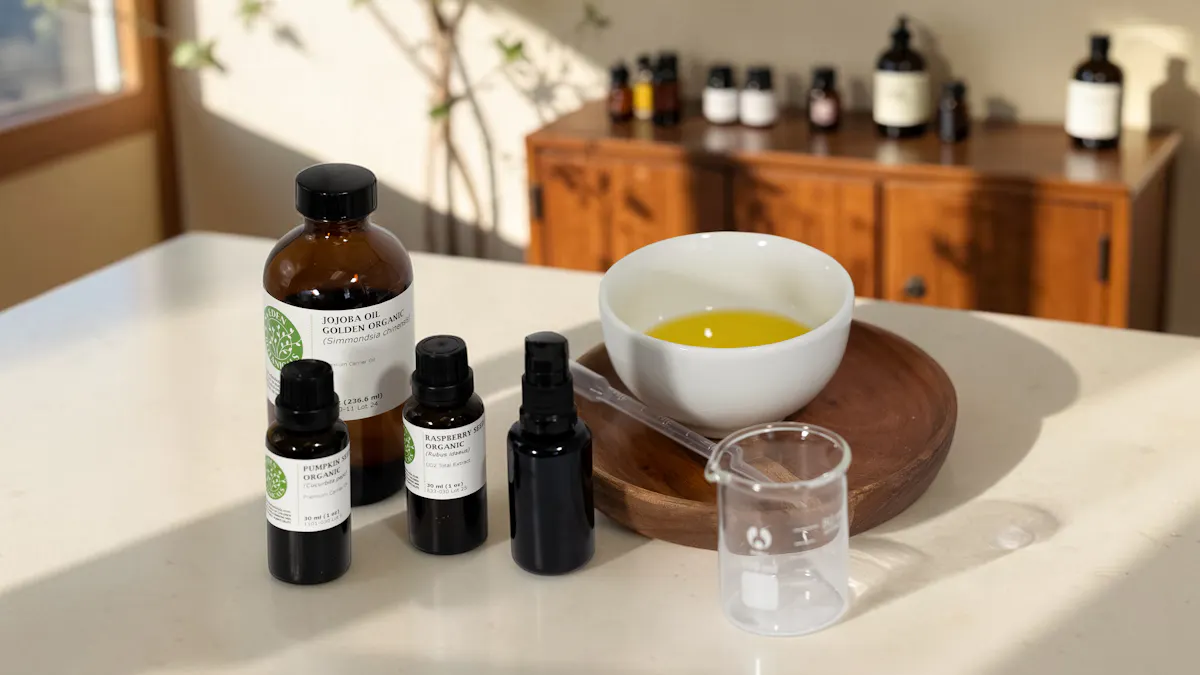
For a more skin-realistic test of aroma, dilute a few drops of the essential oil or absolute in a neutral carrier oil like Jojoba Oil, Golden - Organic or Fractionated Coconut Oil - Organic. Apply this dilution to your wrist or inner elbow to experience how the aroma wears and interacts with the skin over time. Keep in mind that oils may smell different on different people due to variations in personal chemistry, pH, and body temperature.
A Simple Experiment to Explore Aroma Intensity
Aroma intensity varies widely between oils. To observe and explore the different nature of various materials, try this simple experiment: Compare a strip dipped in Peppermint, India - Organic or Orange, Sweet - Organic to one dipped in Sandalwood – Plantation Grown or Vetiver, Madagascar - Organic. The Peppermint and Orange oils leap off the paper, while the Sandalwood and Vetiver take several minutes to reveal their depth. This is largely due to viscosity and molecular weight, both of which affect volatility, the speed at which aroma molecules evaporate and travel through the air.
Understanding aroma intensity is key to deciding how much of each oil you want to use in your blend, and whether an oil belongs in your base, middle, or top note accords. You can learn more about note classification and perfumery blending in our article on Natural Perfumery Basics.
Preview Your Layering and Blending Ideas
To simulate how different oils might interact in a blend, try this blending trick: use individual fragrance tester strips for each oil, fan the strips together, and then wave them gently under your nose. This gives a great preview of their potential harmony before committing to mixing.
Special Considerations for Absolutes
In general, absolutes need to be diluted for proper aromatic evaluation. Undiluted, these highly concentrated extracts don’t smell quite like the fresh plant material and can be too intense for the senses. Two examples are Orange Blossom Absolute and Lotus Absolute, Pink which can smell off-putting undiluted, but are absolutely gorgeous when diluted.
Other absolutes are too sticky or dense to get onto a fragrance tester strip, such as Vanilla Absolute, for example. When working with an absolute that is very thick or solid, you may need to gently warm the bottle in a hot water bath to liquify it before dipping in your fragrance tester strip. Once liquified, you can assess the absolute with a fragrance tester strip, or use a pipette to add a few drops to either perfumer’s alcohol or a warmed carrier oil and try a diluted skin application.
A Note on Evaluating Hydrosols
Assessing the aroma of Hydrosols can be tricky. Comprised of the gentle, water-soluble components of the plant, their aromas differ from the scent of the fresh plant or the essential oil. In addition, smelling Hydrosols directly from the bottle may result in a distorted aroma that is often more herbaceous or earthy than expected. To assess a hydrosol accurately, follow these steps:
This method simulates how the Hydrosol might perform in actual use, revealing more of its subtle character and beauty.
Assess for Success
By using proper aroma assessment techniques, formulators can develop a more intuitive, nuanced understanding of each material, leading to more balanced, effective, and expressive aromatic blends. Not sure what the oil should smell like? Check out the Aroma Profile description on the product page in the Details section. Or contact us to ask your questions and we are happy to help walk you through the process!