5 min read
2026-02-20
Himalayan Blue and Beyond: Discover Our Pine Essential Oils
Written By: Robin Lander
Coniferous trees such as Pine, Fir, and Spruce have been widely studied for their dense profusion of cleansing, uplifting constituents and their positive effects on wellbeing. The Japanese practice of “forest bathing”— a mindful, sensory immersion in nature — has gained global recognition for its restorative benefits. Whether experienced during a walk in the woods or through the aroma of a coniferous essential oil, the rejuvenating spirit of these trees is undeniable.
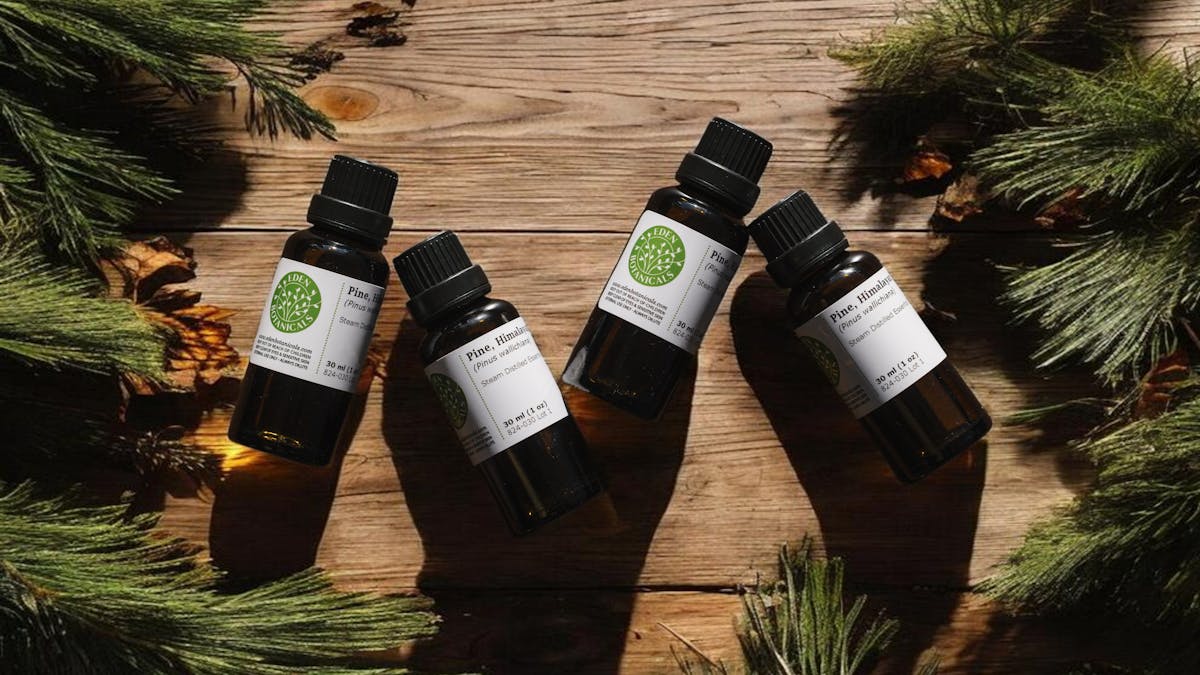
We’re excited to introduce a new addition to our collection: Pine, Himalayan Blue essential oil. Distilled from the wild-harvested, blue-green needles of these majestic trees, it has an invigoratingly fresh, crisp, cool, camphoraceous aroma. This high-elevation evergreen, also known as Bhutan Pine, is native to the Himalaya, Karakoram, and Hindu Kush mountain ranges.
With high levels of alpha-pinene (40%) and beta-pinene (23%), Himalayan Blue Pine possesses a highly diffusive and enlivening character. Formulators will appreciate its aroma in personal care products designed to refresh, clarify, and cleanse, as well as in household care, room sprays, diffuser blends, and fresh forest and fougère perfumes.
Read on to explore our Pine offerings and discover how each can bring vibrant forest energy to your formulations.
The Beauty of Pine
Each of our Pine essential oils has its own distinct aroma, origin, and uniquely inspiring personality. In general, Pine oils have a warming and drying quality that lends to their energizing, clearing, and tonifying nature. They can be used interchangeably depending on the aromatic profile you’re seeking.
Pine, Himalayan Blue
Botanical Name: Pinus wallichiana
Origin: India
Aroma: Strong, crisp, camphoraceous, and pine-like with a dry balsamic body and a fresh cooling facet that warms in the dry down.
Suggested Use: Pine, Himalayan Blue is ideal in muscle and joint massage oils, chest rubs, clarifying soaps, invigorating scalp oils, aftershaves, and serums for oily and congested skin. It refreshes the senses in baths, steams, and saunas and is especially welcome in diffusers during study sessions or seasonal changes.
Pro Tip: For a revitalizing “forest bath” for muscles and joints, add 4 drops Pine, Himalayan Blue with 4 drops Frankincense in one Tablespoon of Fractionated Coconut Oil – Organic or other carrier oil of choice. Stir the blend into 1-2 cups Epsom salt and add to the bath just before entering.
Pine, Scotch – Organic
Botanical Name: Pinus sylvestris
Origin: Bulgaria
Aroma: Strong, fresh, dry-balsamic, terpenic and pine-like with a distinctive sweet-coniferous top note.
Suggested Use: With a long history of use in traditional energy-clearing practices, Pine, Scotch - Organic is beautiful in room fresheners and linen sprays for mattresses, sheets, pillows, and curtains. It opens the senses in cleansing baths, chest rubs, and diffuser blends and is also a favorite in household cleaning products.
Pro Tip: Pine is excellent for thinning more viscous oils that might otherwise clog a diffuser. Before adding Sandalwood, Cedarwood, Vetiver, or Jasmine to a diffuser, first blend them with Pine, then add to your diffuser.
Pine, Pinyon – Wild
Botanical Name: Pinus edulis
Origin: USA
Aroma: Smooth, fresh conifer and woody/resinous body notes with a butter-like back note and very fine, peach/floral top notes of delicate diffusiveness.
Suggested Use: This exquisite, limited edition artisan distillation is truly special. Pine, Pinyon – Wild is a gorgeous top note in perfumery and a luxurious addition to bath and beard oils, aftershaves, lotions, and body butters.
Pro Tip: For a woodsy, conditioning beard oil, add 12 drops Fir, Balsam Absolute - 10%, 10 drops Pine, Pinyon – Wild and 3 drops Sage - Organic to one ounce of Argan Oil – Organic. Shake well and wait 1-2 days for the blend to synergize. Warm 2-3 drops in your palms and massage into the beard.*
Blending With Pine
Pine oils pair beautifully with woody, resinous, herbaceous, and citrus notes. Here are a few of our favorite companions.
Base Notes: Cedarwood, Fir, Balsam Absolute, Labdanum, Frankincense, Oakmoss, Patchouli, Sandalwood, and Vetiver.
Middle Notes: Cardamom, Cinnamon, Clary Sage, Cypress, Jasmine, Lavender, Lemongrass, Neroli, Peppermint, Sage, Rosemary, and Ylang Ylang.
Top Notes: Bergamot, Eucalyptus, Fir, Juniper Berry, Lemon, Orange, Tangerine, Tea Tree, Spruce, and Yuzu.
Pine in Perfumery
Perfumers value Pine essential oils for their ability to introduce fresh, balsamic vitality to top note accords, especially in woody, herbaceous, and forest fragrances. Often featured in masculine compositions, Pine is generally considered a top note or top/middle note. It can also be used to accentuate the brightness of florals like Jasmine and Rose, adding lift and clarity.
Storage and Safety Considerations
Tree needle oils such as Pine are composed primarily of very light, volatile monoterpenes such as alpha-pinene, beta-pinene, and limonene. These constituents are more susceptible to oxidation, giving Pine a shorter shelf-life than many other essential oils.
There may be a risk of skin sensitization if Pine essential oil has oxidized.[1] For best quality, use Pine oils within 2 years of purchase and store in a dark, air-tight container in the refrigerator to help preserve freshness.
Bring the Forest into Your Formulations
Both rooted in the present moment and reaching toward new growth, Pine essential oils are gifts from our ancient tree allies for restoring the energy of centeredness and renewal. Whether you choose them for aromatherapy, cosmetics, or perfumery, they bring the invigorating spirit of the outdoors into your creations.
*We recommend performing a patch test when working with any of our ingredients topically, especially before use on the face. Please check the Safety Considerations section of the product pages and always check with your physician before using any oils if you are on medication or have a serious medical condition.