6 min read
2026-08-07
Alcohol, Oil, or Solid? How to Dilute Perfume
Written By: Robin Lander
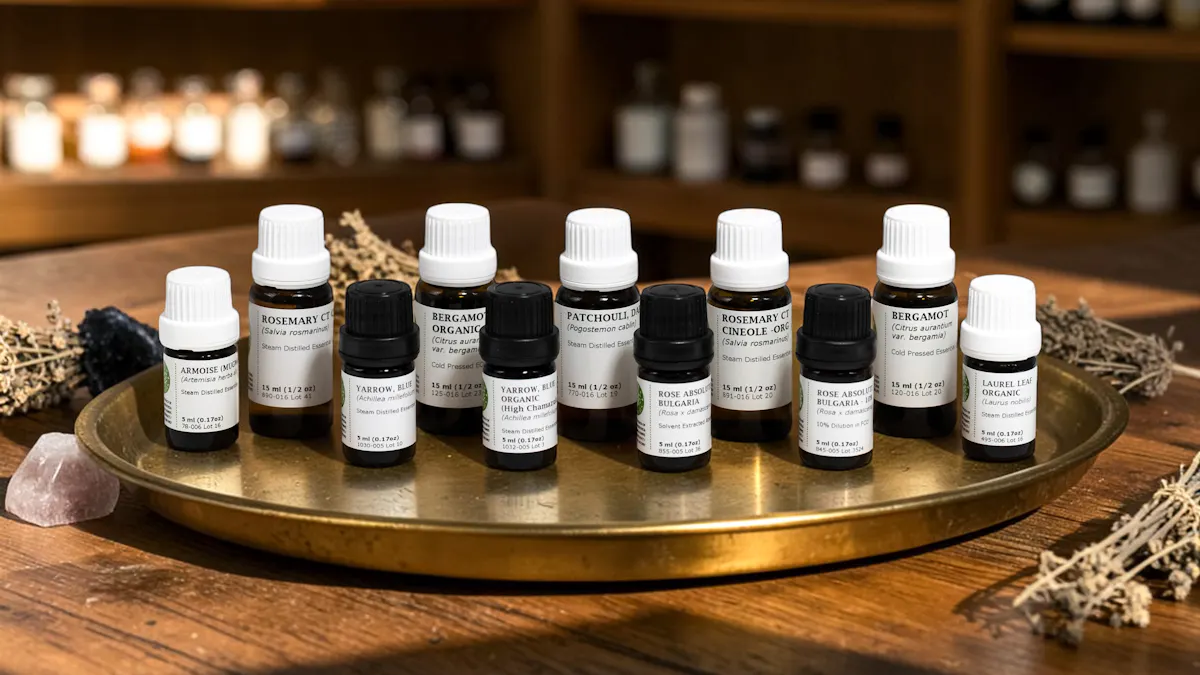
You’ve got an amazing concept for a perfume – or you’ve already formulated one – with your top, middle, and base notes. Now it’s time to decide what type of perfume base is best. Would you like your formula to be carried in alcohol, a vegetal oil, or a wax-based solid?
Each carrier medium has its advantages, and much of it comes down to personal preference. Solubility of each of your aromatic materials may also play a part in your decision. We’ll explore the different options and dilution ratios to help you make the best choice for your perfume formulations.
Why Dilute at All?
Essential oils, including absolutes and CO2s, are highly concentrated, typically requiring hundreds of pounds of plant material to produce. Using undiluted (neat) essential oils repeatedly on the skin may lead to irritation and sensitization. In addition to improving skin safety, diluting aromatic materials allows them to unfold more efficiently, helping to reveal their full character.
Depending on the specific essential oils used in your perfume, you may find that your perfume blend evolves differently in an alcohol vs. oil vs. solid base. Let’s dive deeper into each type of perfume.
Alcohol-Based Perfume
Alcohol-based perfumes are perhaps the most common type of perfume. There is something both luxurious and convenient about spraying a perfume on the skin, although alcohol-based perfumes can also be dabbed on at various pulse points. Alcohol is also the most compatible perfume medium as nearly all essential oils readily dissolve in it.
What You’ll Need:
· 190 proof ethyl alcohol (ethanol), perfumer’s alcohol, or cosmetic-grade denatured alcohol.
Typically, perfumer’s alcohol and cosmetic-grade denatured alcohol have been rendered “undrinkable” by combining them with chemical additives to denature them. This also avoids the steep federal tax on consumable alcohol, lowering the cost considerably. Never use isopropyl alcohol which has an unpleasant aroma and is not cosmetic grade.
Advantages:
· Excellent solubility for most aromatic materials.
· Top notes and bright, fresh materials open strongly and really shine.
· Alcohol helps lift and diffuse the aromatics.[1]
· Has the strongest projection, creating a layer of scent around the wearer that can be smelled by others.
Disadvantages:
· Has an initial sharp smell of alcohol.
· Alcohol can be expensive and difficult to obtain.
· Can be irritating to sensitive or dry skin.
· Flammability – care must be taken during production, storage, and shipping of perfume.
Dilution for Alcohol-Based Perfumes: 5-25% Essential Oil Concentration
While there are a wide range of concentrations in fragrance, the highest ratio for perfume is called an Extrait or Parfum and it usually falls between 15-30% concentration.
Example: Many perfumers feel comfortable with a 20% concentration. This would be 1 milliliter of your aromatic blend into 4 milliliters of alcohol. Alternately, use a scale for accuracy and add 1 gram of your aromatic blend into 4 grams of alcohol.
What is “Eau” in a Perfume?
Eau is the French word for water, referring to perfume types with a lighter concentration of essential oils. These tend to be sprayed or splashed on the body more liberally and are generally more economical to produce. Here are common essential oil concentrations in an alcohol base:
· Eau Fraiche: 1-3%
· Eau de Cologne: 3-8%
· Eau de Toilette: 5-10%
· Eau de Parfum: 10-20%
Should I Add Water to My Perfume?
Some alcohol-based perfumes and most commercial fragrances contain 5-10% water. This is because water helps give the aroma more lift and also softens the effect of the alcohol on the skin.[2]
If you want to add water to your perfume, be sure to use deionized or distilled water and not tap water (tap water is usually not neutral in aroma). Keep in mind that 190 proof alcohol already contains about 5% water and calculate accordingly. Too much water can make your formula cloudy.
Where to Obtain Alcohol:
The Organic Alcohol Company in Ashland, Oregon offers 190-proof alcohol and specialty denatured alcohol. Many perfumers prefer organic grape alcohol, however some like the options made from cane or wheat.
Please note: Some states regulate or ban the sale of 190-proof alcohol, so online suppliers may not be able to ship to your state.
Can I Use Vodka?
Unfortunately, vodka is generally only 80 proof (40% alcohol), which isn’t strong enough to fully dissolve many thick, resinous, or solid aromatic materials. It also doesn’t have a neutral aroma. While vodka can be used as your perfume base, your perfume may have a cloudy appearance, and your aromatics may separate and float on the surface. Using an amber or opaque bottle and shaking before each use can help with these issues.
For full instructions on creating an alcohol-based perfume, please see our article: Natural Perfumery Basics.
Oil-Based Perfume
Oil-based perfumes are generally the easiest to make, especially for the beginning perfumer. They can be dabbed on the skin or applied from a bottle with a roller applicator. A more personal fragrance experience, the aroma remains closer to the skin rather than projecting into the surrounding air, evolving slowly as the oil warms from body heat. Oil-based perfumes are ideal for self-care rituals and anointing oils.
What You’ll Need:
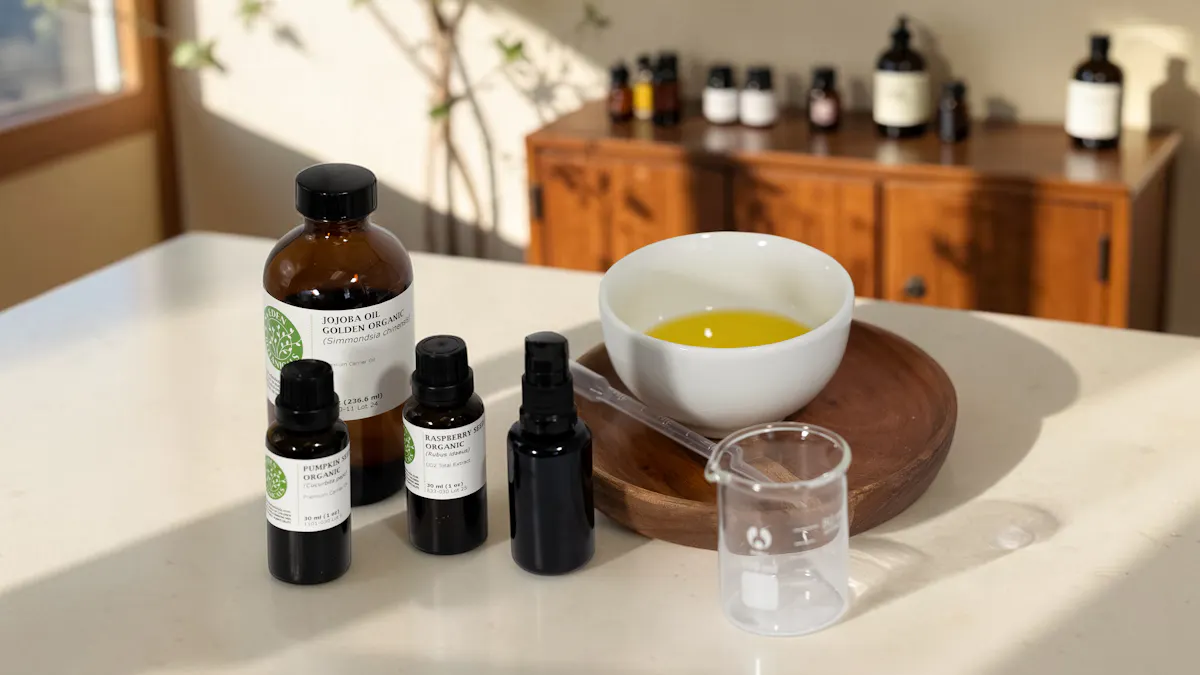
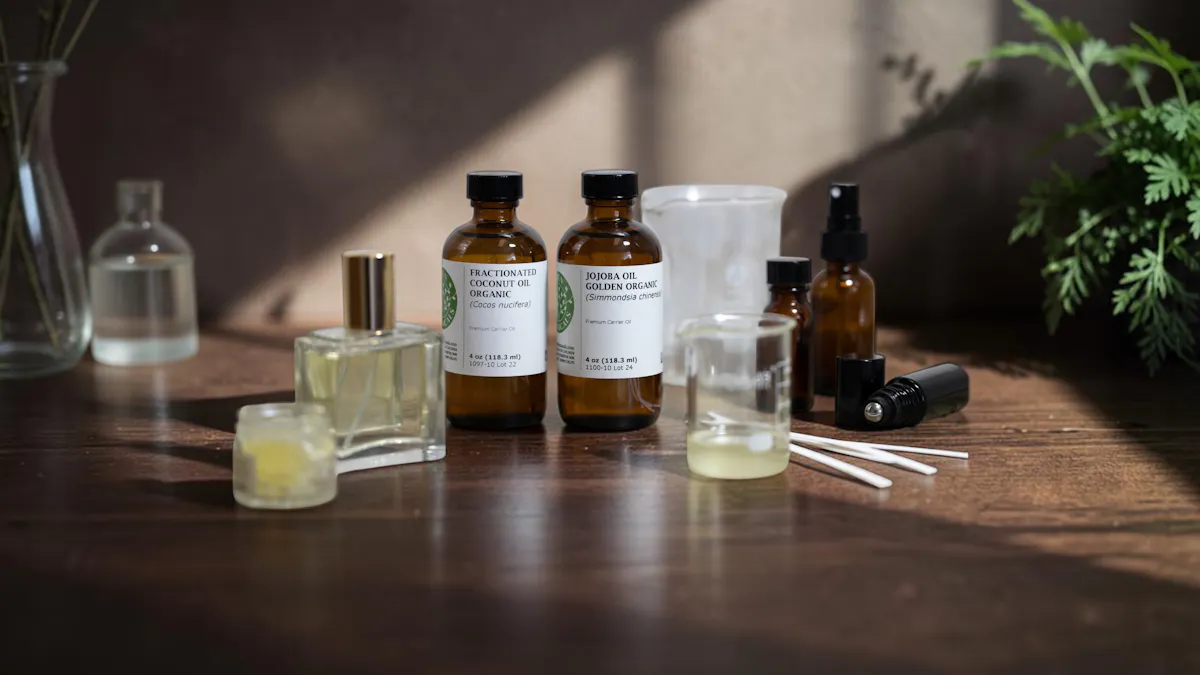
· Jojoba Oil, Golden – Organic and/or Fractionated Coconut Oil – Organic
These are the most widely used carrier oils for oil-based perfumes. They are highly stable and resistant to oxidation, have a silky feel, are well-tolerated by the skin, and don’t have much aroma of their own.
Advantages:
· Carrier oils are economical and easy to obtain.
· Typically last longer than alcohol-based perfume as the oil slows evaporation.
· May be better for sensitive skin or those avoiding alcohol.
· Carrier oil(s) offer moisturizing benefits for the skin.
Disadvantages:
· Not all aromatic materials are oil-soluble, and some are only partially oil-soluble (check the Solubility & Blending Suggestions section of the product page to find out).
· Won’t project like an alcohol-based perfume (although some prefer this).
· Top notes such as citrus oils are less diffusive.
Dilution for Oil-Based Perfumes: 15-30% Essential Oil Concentration
There are no hard rules for perfume, although oil-based perfumes often have a higher concentration of essential oils than alcohol-based perfumes to compensate for their reduced diffusiveness.
Example: Many perfumers like a 25% concentration. This would be 1.25 milliliters of your aromatic blend into 3.75 milliliters of carrier oil. Or use a scale for accuracy and weigh in grams.
Pro Tip: Perfumers suggest when making an oil-based or solid perfume that you may want to increase your top notes and reduce your base notes. This is because lipid oils tend to hold down and dampen top notes, while oil and wax slow evaporation and hold base notes longer on the skin.[3]
Looking for a little bottle for dabbing-on your alcohol or oil-based perfumes? See our 8.5 ml Glass Perfume Bottle.
Solid Perfume
Solid perfumes go back to ancient times and were the first perfumes, usually made from botanicals infused in fats and oils. Applying solid perfume is a more intimate, sensual experience and can be considered part of a self-care practice. The aroma of the perfume stays close to the skin and unfolds slowly as it warms from body heat. They are also travel-friendly with no risk of spills.
What You’ll Need:
· Jojoba Oil, Golden – Organic is preferred for its velvety feel on the skin, however Fractionated Coconut Oil – Organic can be used.
· Beeswax to make the perfume solid. A vegan option is plant-based candelilla wax.
Advantages:
· Feel lovely and moisturizing on the skin.
· Have a rich, well-rounded aroma where middle and base notes linger and evolve beautifully.
· Generally, have more longevity than alcohol or oil-based perfumes, due to a higher concentration of scent and slower evaporation.
· Can be housed in beautiful compacts, glass jars, jewelry, or in eco-friendly packaging like cardboard tubes or recyclable tins.
Disadvantages:
· As with oil-based perfumes, not all aromatic materials are oil-soluble, and some are only partially oil-soluble.
· Can melt in an overly warm environment.
· The aroma may not project around the wearer (although it isn’t necessarily meant to).
· Top notes are usually subdued.
Dilution for Solid Perfumes: 25-40% Essential Oil Concentration
Solids often have the highest concentration of essential oils because the essential oils are easily suspended in the medium of oil and wax.
Example: A 30% concentration would be about 45 drops of your aromatic blend into 5 milliliters of Jojoba Oil combined with 1.8 grams of beeswax.
For full step-by-step instructions for creating a solid perfume, please see our article: Natural Perfumery Basics.
Which Perfume Base is Best?
There isn’t a best way to wear a perfume – it’s really about what matches your personal style, brand, and/or intentions. Alcohol-based perfumes create beautiful projection, oil-based offer a more personal, longer-lasting experience, and solid perfumes a slower, more sensual unfolding. You might enjoy working with all three, adapting the same perfume formula to different bases. Experiment with each medium to discover how your formulations evolve and find their best expression.
Article References and Suggested Reading
1 Aftel, Mandy, Essence & Alchemy: A Natural History of Perfume, North Point Press, 2001, p.64.
2 Can You Use Vodka to Make a Perfume? What to Use Instead, by Karen Gilbert, https://www.karengilbert.co.uk/how-do-i-use-perfumers-alcohol
3 McCoy, Anya, Homemade Perfume, Page Street Publishing, 2018, p.107.